Best Smartphone under ₹ 100000 to Buy in 2026: Top Picks
This article covers the best smartphones under ₹100000 in 2026. Usually, these lineup devices are packed with tons of features like AI-driven features, top cameras, powerful processors, better thermal management, fast charging, and bigger batteries without any major setbacks.
Whether you’re looking for a device as a working professional, a workhorse smartphone for content creation, or for AAA gaming, these smartphones use powerful processors like the Apple A19, Qualcomm Snapdragon 8 Gen Elite 5, or MediaTek Dimensity 9500, with a minimum of 12 GB of RAM and 256 GB of Storage.
Higher specs do not make a phone the best. Even a minor difference in UI, camera processing, thermals, display, storage, and battery life can make a difference. A smartphone that offers great specifications and works well for one person may not necessarily be the best choice for you.
This article will guide, the best smartphone for you according to the following criteria:
- Performance and thermals
- User Interface and software experience
- Display and build quality
- Camera quality
- Content creation
- Gaming performance
- Storage and connectivity
- All-day battery life
- Overall value and performance
In this segment, all the phones offer the best hardware you can get, but even small differences can improve your workflow and overall user experience.
Table of Contents
Best Smartphone Under ₹ 100000: Apple iPhone 17

In the iPhone 17, the core is the latest Apple A19 (3nm) processor with an advanced custom-designed vapor chamber for thermal dissipation directly over the chip; the new thermal system delivers up to 40% improvement in sustained CPU and GPU performance.
When it comes to the smoothest UI and regular optimizations, very few mobile phone brands can compete with it. With iOS 26’s expanded Apple AI features, localized AirPods Live Translation, and redesigned native apps like the camera, updates in 26.6 focused on bug fixing. Apple’s real strength lies in its optimization and frequent updates.
iPhone 17 features a 6.3-inch LTPO Super Retina XDR OLED display panel that supports HDR10, Dolby Vision, a 120Hz refresh rate, and 3000 nits of peak brightness; it is a big update, ditching the 60Hz display, which was really outdated and does not feel good in this price segment.
It comes with an aluminum frame; it is prone to dents. Though the aluminum frame is known for better thermal dissipation and has class back, Apple doesn’t play with design and keeps it practical, which helps maintain its premium feel.
After the UI, Apple is known for its best-in-class camera performance, especially when it comes to videography. Featuring a dual 48-megapixel camera for the primary and ultrawide, and an 18-megapixel front camera. It can shoot up to 4 k at 60 fps from both cameras, featuring HDR and Dolby Vision, and 1080p at up to 240 fps and 1080p up to 120 fps from the selfie camera.
Apple iPhone 17 can be a main device for content creators; not only is its video and photo performance good, but it is also good at video editing, color grading, and capable of randaring professional level in 4k and HDR.
With an average AnTuTu (v11) of 2.2 million and optimized apps from Apple, gaming on the iPhone 17 is smooth and snappy, making it reliable for e-sports. However, 256 GB storage may feel a little lacking because some AAA games like Genshin Impact and PUBH/BGMI take up space, up to 50GB each.
Apple no longer features 128 GB storage; instead, the iPhone 17 now comes with 12 GB RAM and 256 GB storage as a standard variant. Good initiative to keep up with modern mobile phones, especially with every new update, apps getting heavier bit by bit.
It comes with a 3692 mAh battery; in real-world use, it can last up to 10 hours. 50% can be charged with 25W wireless charging in 30 minutes and 50% within 20 minutes with wired charging. The battery size is relatively small compared to other phones in this article and major flaw of the iPhone 17.
Apple’s long-term software support and its features, Wi-Fi 7 and Bluetooth 6.0, make this device future-proof. The USB Type-C 2.0 port can be a significant drawback for content creators transferring large video files.
Price: ₹99900
Overall: The iPhone 17 is an excellent smartphone under ₹ 100000 all-rounder for users who prioritise camera and video quality, software optimisation, gaming, and long-term usability. Its main drawbacks are the relatively small battery and slow USB data-transfer speeds.
Best Smartphone Under ₹ 100000 : Samsung Galaxy S26
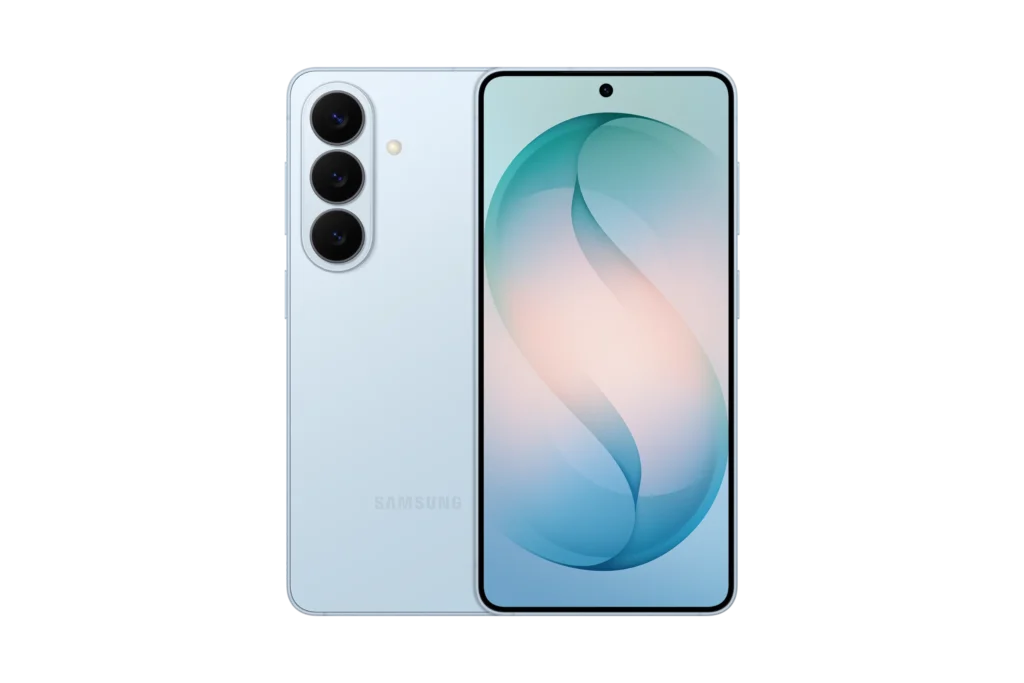
Another one of the best smartphones under ₹ 100000 that comes with an octa-core (8-core) Qualcomm Snapdragon 8 Gen Elite 5 in the US and CN markets; in the Indian market, it features a deca-core (10-core) Exynos 2600 based on 2 nm architecture. It is the first 2nm based system on chip (SoC) for mobile. Samsung designed a dedicated Vapor Chamber cooling system to maintain sustained performance.
One UI 8.5 is an Android 16-based custom build Samsung operating system. Samsung promises 7 years of OS updates, which makes it future-proof for long-term users; its UI is snappy, responsive, and it’s filled with many useful AI features.
Samsung Galaxy S26 features a 6.3 inche Dynamic LTPO AMOLED 2X display panel that supports 120Hz, HDR10+, and 2600 nits of peak brightness. A beautiful display for gaming and color grading. Both the front display and back glass use Gorilla Glass Victus 2, and the frame is made of aluminum for better thermal conductivity.
It comes with a triple camera setup of 50 MP primary, 10 MP telephoto, and 12 MP ultrawide, which supports 8 K up to 60 fps, 4 K at up to 60 fps, and 1080p up to 240 fps, featuring 10-bit HDR and HDR10+ video recording, and most take-off-the-year feature Horizon Lock; it gives the most stable video performance, like footage is being shot with a gimbal. The front camera is 12 MP and capable of recording 4 K at up to 60 fps with HDR10+.
A truly capable smartphone for content creators with its powerful processor, advanced camera system, and AI capabilities. The phone can run any AAA games with ease without any lag and perfroamce drop.
It also comes with 12 GB of RAM, which is standard for all variants, and it comes with three storage options: 128 GB, 256 GB, and 512 GB. I find 256 GB storage is the best value for money because it ticks out all required check list.
The 4300 mAh battery is really underwhelming, with a power-hungry Exynos 2600 processor; on average, with daily moderate use, it lasts about 6 to 7 hours. This is the lowest in this list; however, the phone can charge to 55% in just 30 minutes and supports 15W wireless Qi2 charging.
It features USB Type-C 3.2, Wi-Fi 7, and Bluetooth 5.4. Type-C 3.2 ensures a speedy transfer of large files, especially for those who frequently need to transfer large files.
Priced: ₹ 79999 for 128GB and ₹ 84999 for 256GB
Overall: The Samsung Galaxy S26 is an excellent smartphone under ₹ 100000 for those who are looking for excellent performance, smooth UI, and long-term reliability. The device’s only drawback is its small battery.
Best Smartphone Under ₹ 100000: Pixel 11

The Pixel 11 launched in August 2026; it features the septa-core Google Tensor G6 (3nm) processor paired with a dedicated multi-layer graphite thermal sheet array.
It is the most optimized Android phone, with its stock Android 17 UI, and Google promises to provide 7 years of major updates. It comes with market-leading UI experiences and is well known for its simplicity, AI features, and long updates.
Google Pixel 11 features an OLED panel that supports a 120Hz refresh rate, HDR10+, and a peak brightness of 3000 nits. It also comes with Gorilla Glass Victus 2 on both the front and back glass and an aluminum frame. This maintains its aesthetic appearance,
It features a triple camera setup of 48 MP primary, 10.8 MP telephoto, and 13 MP ultrawide; these lenses are capable of delivering best-in-class photography and can shoot up to 4 K at 60 fps with 10-bit HDR, but the ultrawide lens is limited to 4 K at 30 fps. The front camera is 10.5 MP and is also capable of shooting 4 K up to 60 fps. A very capable device for shooting footage with really good stability and very little video jitter.
It is capable of doing light video editing, and certainly it is not for playing AAA games like Genshin or Wuthering Waves, but you can play lighter games without any lag.
The Google Pixel 11 comes with 12 GB RAM and 256 GB storage, USB Type-C 3.2, Wi-Fi 6, and Bluetooth 6.0. The phone gets an upgrade in storage; the base model was 128 GB and carries the same specs as the Pixel 10.
The device is powered by a 4985 mAh battery, which can be seen as a negligible improvement over the Pixel 10 by 15 mAh; However, battery performance is definitely improved, and all thanks to Google Tensor G6 and refined.
Price: From ₹89999
Overall: Google Pixel 11 is for those who want a clean, smooth Android experience, excellent camera performance, a good all-day battery life, and reliable OS updates; the only thing it lacks is pure raw power for video editing and gaming with competing smartphones.
Best Smartphone Under ₹ 100000: Oppo Find X9
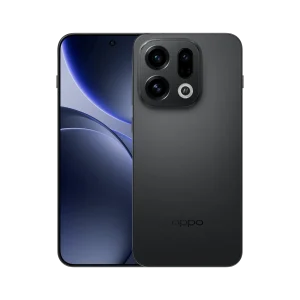
The Oppo Find series is renowned for its exceptional cameras and raw performance. The Find X9 is powered by the cutting-edge MediaTek Dimensity 9500 (3nm) chipset, which is kept running at peak efficiency by a massive, dedicated 32,052.5 mm² Ultra-Thin Mesh Vapor Chamber placed directly over the processor.
It runs on ColorOS, which has come a long way in recent years. Oppo focuses on clean layouts and a refined interface, helping deliver a smooth and user-friendly experience. Oppo Find X9 runs a UI based on Android 16, and it is promised to receive five major OS updates.
It comes with an AMOLED display that features 120Hz, Dolby Vision, HDR10+, HDR Vivid, and a peak brightness of 3600 nits, and an aluminum frame for better thermal dissipation during demanding workloads. Most smartphones in this price range offer LTPO AMOLED panels, which can adjust the refresh rate to reduce power consumption.
The device has a triple 50-megapixel camera setup: a prime lens, a periscope lens with 3x optical zoom, and an ultrawide lens. Featuring Hasselblad Color Calibration for photography, it can take footage in 4 K up to 120 fps, 1080p at 240 fps, HDR, 10-bit video, Dolby Vision, and LOG videos. The video quality is on par with the Apple iPhone 17; however, you may see negligible jitter while switching to another lens during filming.
It can play any AAA games with ease because of its powerful processor that can score over 3.5 million on AnTuTu version 11. Also, it is good for video editing with multiple timelines.
It comes with 12 GB RAM and 256GB storage, Wi-Fi 7, Bluetooth 6.0, and a basic USB Type-C. Again, the basic Type-C port in this segment feels a bit lacking, especially when transferring large files and videos.
Oppo Find X9 comes with a huge 7025 mAh battery that can last the whole day with normal to moderate use, and it also comes with an 80W charger.
Price: ₹ 84999
Overall: Oppo features the Find X9 as a camera phone. But this smartphone ticks all the recommended specifications for content creators, working professionals, and gamers; however, the only limitation is its basic Type-C port.
Best Smartphone Under ₹ 100000: Xiaomi 17
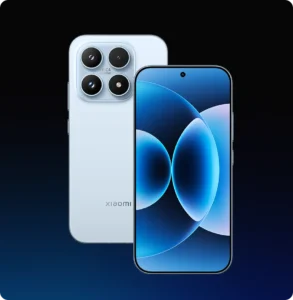
Powered by the Qualcomm Snapdragon 8 Gen Elite 5 processor paired with a 3D IceLoop Cooling System and a 4497 mm² vapor chamber. Xiaomi 17 is stronger in terms of raw power but also has a bigger thermal system. This device truly stands out in this list of best smartphones under ₹ 100000.
It runs on HyperOS, Xiaomi’s custom UI based on Android 16, and will get five major Android upgrades. HyperOS is smooth and packed with many capable AI features; however, not as polished as iPhone 17, Google Pixel 11, and Oppo Find X9, and with Android 17.
Xiaomi 17 features a 50-megapixel triple camera setup comprising a main lens, an ultrawide lens, and a telephoto lens. It can shoot up to 8 K at 30 fps in HDR, 4K at up to 60fps, and 1080p at up to 960 fps, featuring HDR10+, 10-bit Dolby Vision HDR, and 10-bit LOG. The selfie camera is now a 50-megapixel lens and is capable of recording footage in 4 K at up to 60 fps in HDR10+ and 1080p at up to 60 fps.
For content creators, it offers far more options than other smartphones in this article. However, the only difference is that the ultrawide lens is now 102˚, which was 115˚ on the Xiaomi 15. This reduction means it will provide a narrower field of view.
The Xiaomi 17 can handle heavy video editing, including multiple timelines and graphics, thanks to its powerful processor. It also delivers excellent performance in demanding AAA games. However, its compact form factor can make sustained workloads more challenging.
It has Wi-Fi 7, Bluetooth 6.0, and USB Type-C 3.2, with 12 GB RAM and 512 GB storage, and 5G networking; Xiaomi did not hold back on its features, all modern specs, which makes the Xiaomi 15 reliable and future-proof.
The device is powered by a 6330 mAh battery that can last more than 11 to 12 hours with medium to moderate use because of its Silicon-Carbon battery. It comes with a 90W charger bundled in the box; it charges from 0% to 100% in just under 50 minutes.
Priced: ₹89,999
Overall: The Xiaomi 17 is arguably one of the most complete smartphones under ₹ 100000, combining all the flagship specifications like a top Snapdragon 8 Gen Elite 5 processor, 512 GB storage, USB Type-C 3.2, AI features, and top-level video and photo quality bundled in a compact form factor.
Best Smartphones Under ₹ 100000: Honorable Mentions
OnePlus 15: A sub-brand of Oppo known for its UI, it features a powerful Qualcomm Snapdragon 8 Gen Elite 5 processor and a good battery, and can also be a good pick for gamers, content creators, or those who prefer a clean UI, costing around ₹ 79999.
Vivo X300: A very capable device, known for its camera capabilities and strong MediaTek Dimensity 9500 (3nm) chipset, is currently not available in sell, and therefore it couldn’t make out in their list.
Best Smartphones Under ₹ 100000: Comparison
| Smartphone | Processor & Thermals | UI & Software | Camera & Video | Battery | Storage & Connectivity | Overall |
|---|---|---|---|---|---|---|
| Apple iPhone 17 | A19 (3nm), Vapor Chamber | iOS 26, excellent optimisation, long-term updates | Excellent photo/video, 4K 60fps Dolby Vision | ⭐⭐⭐½ | 12GB + 256GB, USB-C 2.0, Wi-Fi 7 | 9.0/10 |
| Samsung Galaxy S26 | Snapdragon 8 Elite 5 / Exynos 2600, Vapor Chamber | One UI 8.5, 7 years of updates, AI features | Excellent, 8K 60fps, 10-bit HDR/HDR10+ | ⭐⭐⭐ | 12GB, up to 512GB, USB-C 3.2, Wi-Fi 7 | 9.0/10 |
| Google Pixel 11 | Tensor G6 (3nm), graphite thermal system | Stock Android 17, clean UI, 7 years of updates | Excellent photography, 4K 60fps HDR | ⭐⭐⭐⭐ | 12GB + 256GB, USB-C 3.2, Wi-Fi 6 | 8.5/10 |
| OPPO Find X9 | Dimensity 9500 (3nm), 32,052.5 mm² VC | ColorOS, refined UI, 5 major OS updates | Excellent, 4K 120fps, Dolby Vision, LOG | ⭐⭐⭐⭐⭐ | 12GB + 256GB, basic USB-C, Wi-Fi 7 | 9.0/10 |
| Xiaomi 17 | Snapdragon 8 Elite 5, 3D IceLoop + 4,497mm² VC | HyperOS, Android 16, 5 upgrades | Excellent, 8K 30fps, 4K 60fps, Dolby Vision, LOG | ⭐⭐⭐⭐⭐ | 12GB + 512GB, USB-C 3.2, Wi-Fi 7 | 9.5/10 |
Best Smartphone Under ₹ 100000: Verdict
| Smartphone | Best For |
|---|---|
| iPhone 17 | Video creators & iOS users |
| Samsung Galaxy S26 | All-round flagship experience |
| Google Pixel 11 | Photography & clean Android |
| OPPO Find X9 | Camera, battery, and Clean UI |
| Xiaomi 17 | Performance, gaming & content creation |
Related Reading
- Smartphone Video Editing: Requirements and Workflow
- The Rise of Mobile Processors: From Single-Core to AI
- Artificial Intelligence: The Future Tool 2026
- How Does a Digital Camera Work? Everything You Need to Know
- iPhone 17 vs. Pixel 10: Which Flagship Actually Fits You?
Frequently Asked Questions
1. Which is the best smartphone under ₹ 100000 in 2026?
The Xiaomi 17 is the best overall smartphone under ₹100000 in this comparison. It combines a powerful Snapdragon 8 Elite 5 processor, 12GB RAM, 512GB storage, USB Type-C 3.2, strong camera capabilities, excellent battery life, and fast charging. However, the iPhone 17, Samsung Galaxy S26, Google Pixel 11, and OPPO Find X9 may be better choices depending on your priorities.
2. Which smartphone under ₹ 100000 is best for gaming?
The Xiaomi 17 and OPPO Find X9 are among the best choices for AAA gaming under ₹100000. Both offer flagship-level processors and capable thermal management for demanding games. The Xiaomi 17 has an advantage in storage and connectivity, while the OPPO Find X9 offers a larger battery and a substantial cooling system.
3. Which is the best smartphone under ₹ 100000 for video editing?
The Xiaomi 17 is the strongest choice for heavy smartphone video editing in this comparison. Its Snapdragon 8 Elite 5 processor, 12GB RAM, 512GB storage, USB Type-C 3.2, and support for advanced video formats make it well-suited to 4K editing and multiple timelines. The iPhone 17 is another excellent option, particularly for users who prioritize video quality, color consistency, and Apple’s optimized software ecosystem.
4. Which smartphone under ₹100000 has the best camera?
The best camera depends on the type of photography and video recording you prioritize. The iPhone 17 is particularly strong for video recording and consistency, while the Google Pixel 11 is an excellent choice for computational photography. The OPPO Find X9 and Xiaomi 17 offer versatile camera systems with advanced video features, including high-resolution recording, HDR, and LOG video.
5. Is 12GB RAM enough for a flagship smartphone in 2026?
Yes. 12GB of RAM is sufficient for most users in 2026, including multitasking, gaming, content creation, and demanding applications. More RAM does not automatically make a smartphone faster. Processor efficiency, software optimization, storage speed, and thermal management also have a major impact on real-world performance.
6. How much storage should I get on a smartphone under ₹ 100000?
For most users, 256GB is the recommended minimum at this price. It provides enough space for apps, photos, videos, games, and system files. If you regularly record 4K video, edit videos on your phone, or install large AAA games, 512GB is a better long-term choice. The Xiaomi 17 stands out here by offering 512GB of storage in this comparison.
7. Which smartphone under ₹ 100000 has the best battery life?
The OPPO Find X9 and Xiaomi 17 offer the strongest battery capacity in this comparison. The OPPO Find X9 has a 7025mAh battery, while the Xiaomi 17 uses a 6330mAh silicon-carbon battery. The iPhone 17 and Galaxy S26 have comparatively smaller batteries, although software optimization and processor efficiency also influence real-world battery life.
8. Which smartphone under ₹ 100000 is best for long-term software updates?
The iPhone 17, Samsung Galaxy S26, and Google Pixel 11 are strong choices for long-term software support. Samsung and Google promise seven years of major updates for their respective devices, while Apple is also known for providing long-term software support. If software longevity is your highest priority, these phones should be considered before choosing primarily on hardware specifications.
9. Which smartphone under ₹ 100000 is best for content creators?
The Xiaomi 17 is one of the most complete options for content creators because of its powerful processor, 512GB storage, USB Type-C 3.2 connectivity, versatile camera system, and support for advanced video formats. The iPhone 17 is another excellent choice, particularly for creators who prioritize high-quality video recording, editing, and Apple’s software ecosystem.
10. Should I buy a smartphone with the highest specifications under ₹100000?
Not necessarily. Specifications alone do not determine the best smartphone. Software optimization, camera processing, sustained performance, thermal management, battery life, display quality, storage speed, connectivity, and overall user experience can make a significant difference. The best smartphone is the one whose strengths match your specific workload and priorities.