
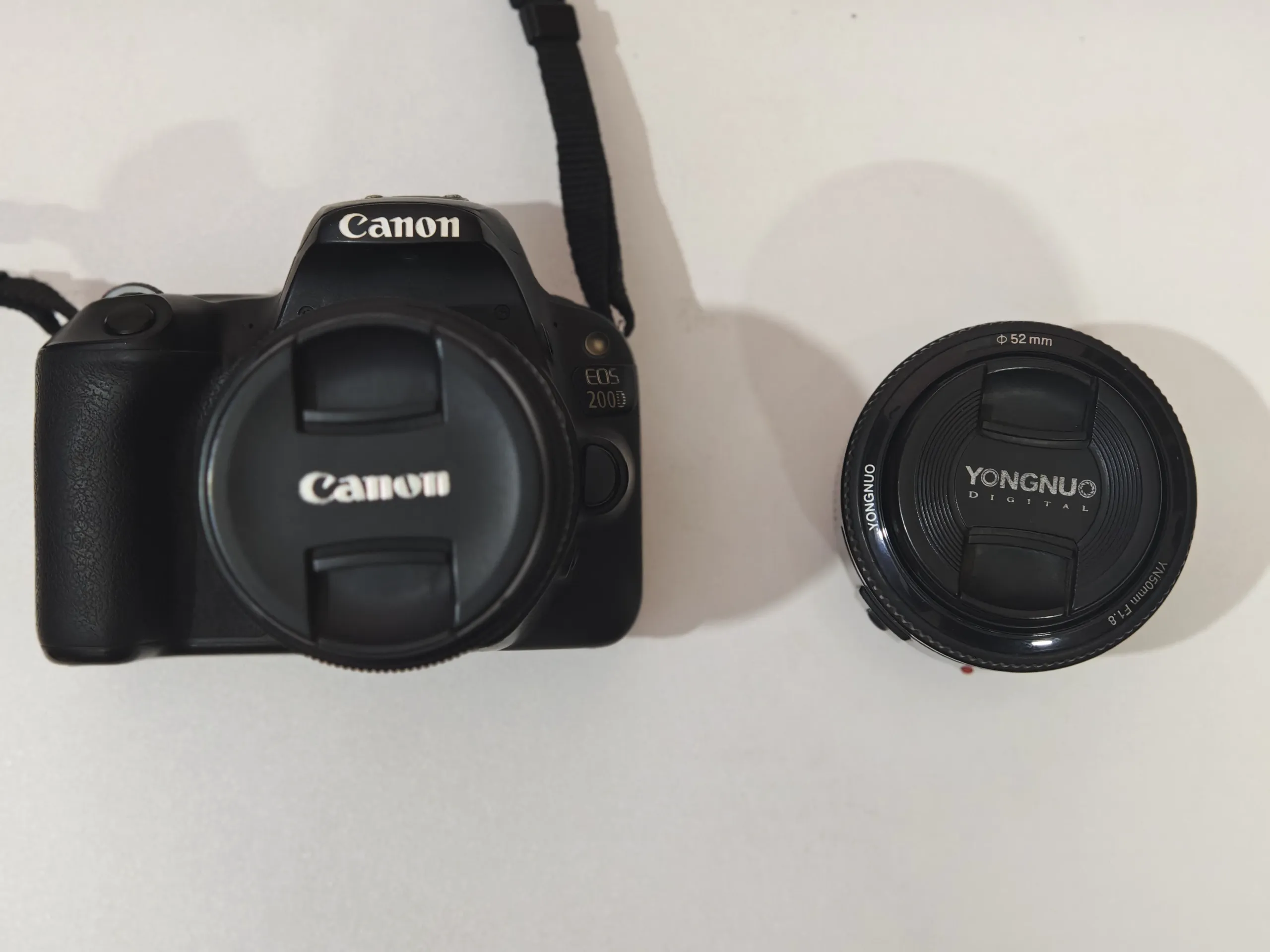

Yongnuo 50mm f/1.8 Lens Review: A Great Canon 200D (Rebel SL2) Upgrade After 7 Years
The Yongnuo 50mm f/1.8 EF is widely celebrated as the ultimate budget lens for portrait enthusiasts. I purchased this prime lens back in 2019, and I am still impressed by how it performs in real-world scenarios when paired with an entry-level crop-sensor body like the Canon EOS 200D (Rebel SL2).
The wide f/1.8 aperture, compact design, and ability to create strong background separation make it particularly useful for portraits, low-light photography, and pro-like shots.
But how does this budget prime actually perform after years of real-world use? In this review, I am sharing my experience with the Yongnuo 50mm f/1.8, including its low-light performance, bokeh, color, sharpness, and portrait rendering.
Yongnuo 50mm f/1.8: Real-World Low Light Performance & Night Bokeh

One of the biggest advantages of moving from a standard kit zoom to a 50mm prime is the wider f/1.8 aperture. It allows more light to reach the sensor, giving you more flexibility to use a faster shutter speed or lower ISO in challenging lighting conditions.
When shooting wide open at f/1.8, the lens draws in a massive amount of light compared to a typical kit zoom at the same focal length, allowing you to keep your ISO low even under streetlamps or decorative city lights.

As you can see in the evening portraits, the background blur (Bokeh) has a distinct, eye-catching character. The out-of-focus lights form soft, circular highlights that give the portraits a pleasing character. More expensive lenses may offer smoother rendering and better control of optical imperfections, but for a budget prime, the Yongnuo produces surprisingly attractive background separation.
Daylight & Event Photography: Color and Contrast
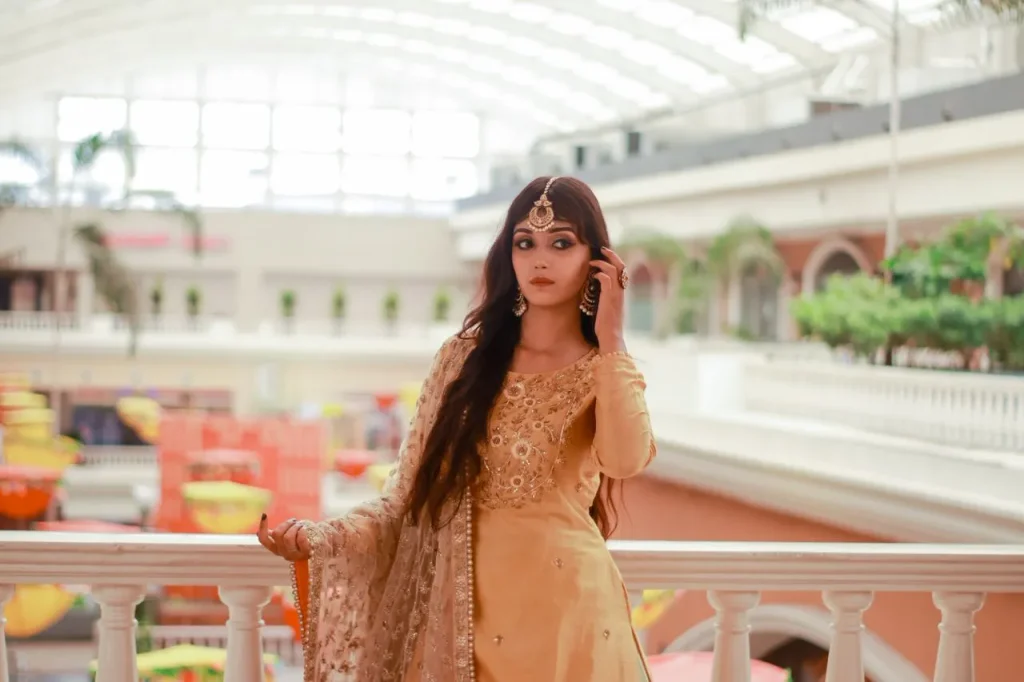
Moving indoors and into bright daylight scenarios, the Yongnuo 50mm f/1.8 continues to show its strengths, particularly in color, contrast, and subject separation.
When shooting under bright, diffuse architectural lighting, like inside a modern shopping mall, the lens manages contrast exceptionally well. It retains fine details in complex clothing embroidery, lace overlay, and jewelry highlights without blowing out the whites or losing shadows to mud.

The color rendering leans slightly warm, which is highly flattering for portrait work as it gives skin tones a natural, healthy glow right out of the camera. If you are using this lens to cover family gatherings, traditional events, or casual street photography, the sharpness at the center of your frame is more than enough to deliver a professional-tier image.
Testing Texture and Contrast: Black and White Portrait Performance
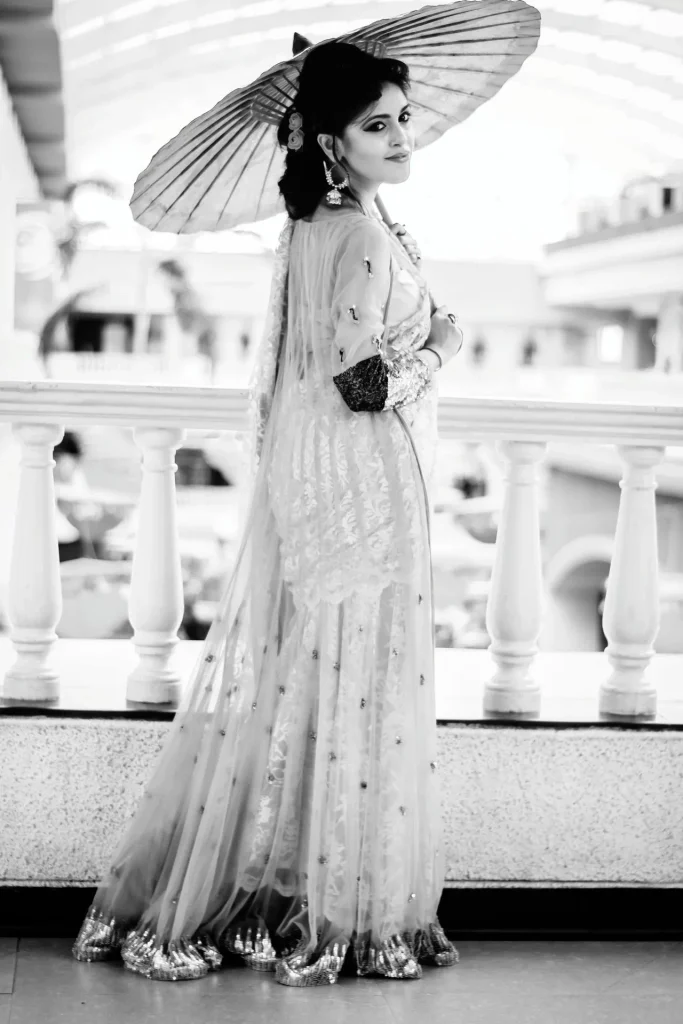
Black-and-white portraits can be a useful way to evaluate a lens’s contrast, tonal separation, and ability to preserve fine texture. In this short, the Youngnuo 50mm f/1.8 paired with the Canon 200D captures the delicate lace embroidery of the dres and the fine lines of the umbrella beautifully; the lens prevents harsh color fringing.
Even with the bright, backlit mall environment, the image retains good center sharpness and tonal separation. The transition from the subject’s dark hair to the bright background also shows how the lens can produce a strong editorial look without requiring expensive glass.
Yongnuo 50mm f/1.8: What I Don’t Like
The Yongnuo 50mm f/1.8 is not perfect. Its biggest advantage is also its biggest limitation: you are getting a very affordable f/1.8 prime, so you shouldn’t expect the same refinement, optical consistency, or build quality. I tried to record video footage it now quick and is noisy
On a Canon 200D (Rebel SL2)’s APS-C sensor, the 50mm focal length also behaves more like an 80mm-equivalent lens, which makes it excellent for portraits but less versatile for indoor group shots, travel, or cramped spaces.
For still photography, however, this limitation matters much less to me. When I’m shooting portraits or everyday photos, the lens’s wide f/1.8 aperture, background separation, and image quality are the reasons I continue to use it.
Final Verdict: Is the Yongnuo 50mm f/1.8 Still Worth It?
After seven years, the Yongnuo 50mm f/1.8 has earned its place in my camera bag. It isn’t the fastest-focusing lens, the quietest lens, or the most refined piece of glass I’ve used. Its limitations become especially noticeable in video, where autofocus can feel slow, and the microphone can pick up the focusing motor.
But for still photography, I have very few complaints considering what this lens costs. The f/1.8 aperture, pleasing background separation, good center sharpness, warm color rendering, and low-light performance make it a surprisingly capable portrait lens.
Paired with the Canon EOS 200D, the 50mm focal length becomes an approximately 80mm-equivalent field of view, which works particularly well for portraits but can feel restrictive indoors or for larger groups.
After using it since 2019, I don’t see the Yongnuo 50mm f/1.8 as a lens that tries to compete with expensive premium glass. Instead, it succeeds by offering a lot of photographic capability at a relatively low price.
If your priority is still photography, particularly portraits, low-light shots, and background separation, this is a lens I would still be happy to keep using. For video, however, its autofocus speed and noise are worth considering before buying
Related Reading
Is the Yongnuo 50mm f/1.8 still wort buying?
For photographers primarily interested in still photography, particularly portraits and low-light shorts, it remains a capable budget prime. However, buyers who need fast, quiet auto focus for video should consider it’s limitations.
Is the Yongnuo 50mm f/1.8 good for Canon Rebel SL2 (EOS 200D)?
Yes. The Yongnuo 50mm f/1.8 works well with the Canon Rebel SL2, particular for portraits, low-light photography, and background separation. APS-C sensor it provides an approximately 80mm-equivalent field of view.