
Bambu Lab X2D AMS: Features, Specs & Is It Worth It?
For years, the Bambu Lab X1 Carbon stood unchanged; it became the benchmark for desktop 3D printing. It combined high-speed performance, multi-color printing, and reliability. However, as 3D printing advances, designers and creators demand more: better engineering-grade performance, less wasted filament, and multi-material capabilities.
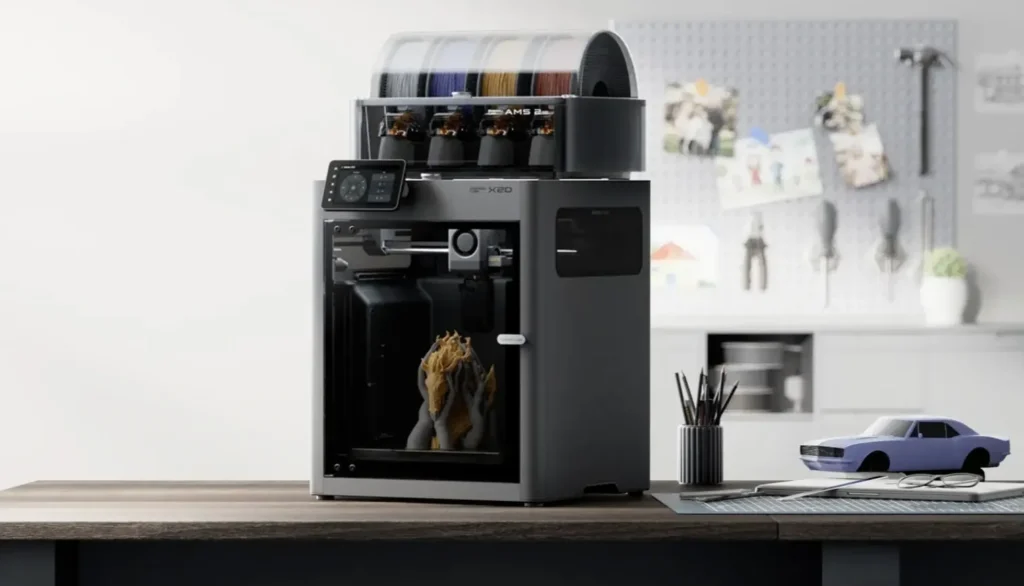
Enter the Bambu Lab X2D AMS. Launched in April 2026 at $899 USD (₹104,999 INR), this machine builds directly on the iconic X1 legacy. By introducing a true dual-nozzle system and overhauled thermal efficiency, it aims to redefine multi-material printing.
In this breakdown, we will dive deep into its engineering, benchmark its real-world specifications, and determine whether the performance upgrade justifies the premium price.
Table of Contents
Dual Nozzles: Less Waste, More Flexibility
The single biggest complaint about the original AMS (Automatic Material System) was the sheer amount of waste. Changing colors or materials through a single nozzle meant constant waste of filament “poop” and was massively time-consuming.
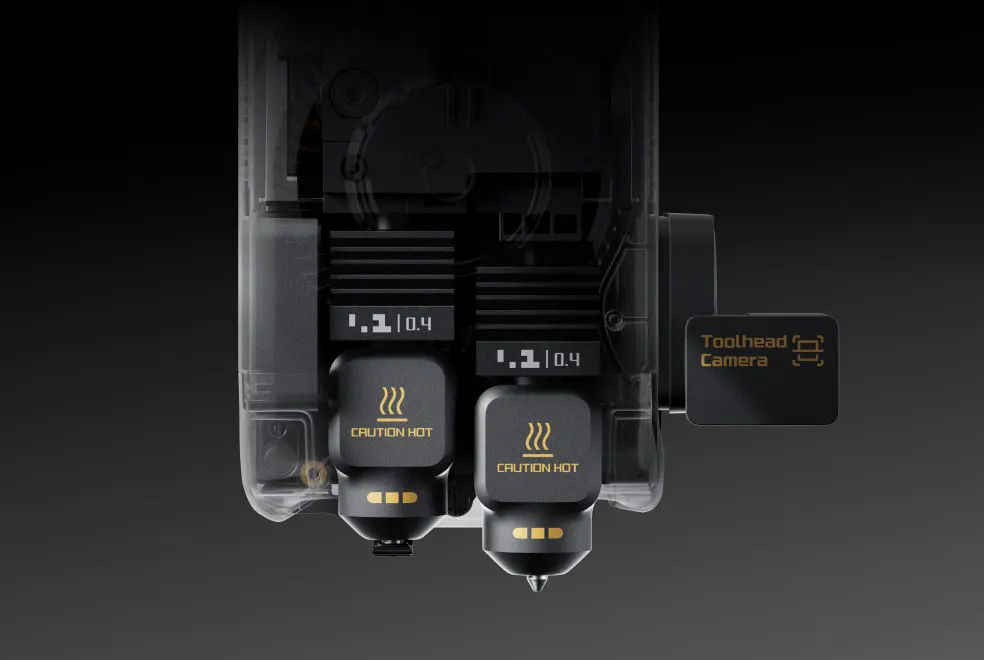
The X2D addresses this bottleneck with its dual-nozzle system:
- Fast Material Switching: The toolhead packs a primary direct-drive nozzle alongside a secondary dedicated nozzle.
- Dedicated Support Material: You can now load premium filaments (like carbon-fiber nylon) in the main nozzle and pure support material, like PVA, in the second nozzle.
- Reduced Filament Waste: Because the printer switches between nozzles mechanically rather than purging through one, multi-material prints finish in a fraction of the time with almost zero wasted plastic.
Professional-Grade Enclosure
While the X1C could print ABS and ASA, larger structural parts were always prone to warping due to uneven cooling and temperature fluctuation inside its passive enclosure.
The Bambu Lab X2D fixes this with a fully active 65°C heated chamber. Combined with a high-temperature heated bed, this managed thermal environment helps reduce temperature gradients during printing, improving stability and layer adhesion.
This means you can confidently print engineering-grade plastics like polycarbonate (PC), nylon (PA), and ASA, which can be sensitive to thermal conditions. By maintaining a more consistent chamber temperature, the X2D can help reduce warping and improve print consistency.
AMS 2 Pro: Active Filament Drying
With the printer, the Bambu Lab X2D also features the AMS 2 Pro combo, an upgrade that combines multi-material filament management with active drying capabilities.
Rather than keeping your filament dry with silica gel packets, the AMS 2 Pro features an integrated active filament dryer to help remove moisture from filaments. This is particularly useful for hygroscopic materials like nylon (PA) and PETG; it can dry while sitting inside the hub, ensuring your filament is always in top condition for feeding into the extruder.
Precision and Speed
Bambu Lab X2D didn’t compromise on its well-known speed printing performance associated with the brand. Powered by a high-force PMSM Servo Extruder and advanced eddy-current flow calibration, it helps optimize extrusion consistency during printing.
The AI-powered computer vision system has also been upgraded, catching spaghetti errors, bed adhesion, and first-layer defects before they ruin a long print. These monitoring features can help reduce wasted filament and prevent failed prints from consuming hours of printing time.
Is Bambu Lab X2D Worth the Upgrade?
Priced at $649 for the standalone unit and $899 for the AMS 2 Pro combo (approximately ₹104,999 in India), the Bambu Lab X2D targets users who need more than conventional single-nozzle 3D printing. It effectively brings industrial dual-extrusion capabilities down to a consumer price point.
- Who it’s for: Functional prototyping labs, small businesses, engineering students, and serious hobbyists who print complex geometries requiring soluble support or heavy-duty materials.
- Who can skip it: If you only print simple PLA or PETG trinkets and don’t mind the purge waste of the original AMS, your older P1s or A1 may still meet your needs without the additional expense.
For X1 Carbon owners, the X2D’s appeal ultimately depends on whether its dual-nozzle system and thermal-management features solve real limitations in their existing workflow. For users who primarily print basic models, the upgrade may be difficult to justify. However, for those seeking greater material flexibility and reduced purge waste, the X2D could represent a meaningful step forward in desktop 3D printing.
New to 3D Printing?
If you’re still learning how 3D printing works, read our comprehensive guide to How does 3D Printer work? printer architecture, and kinematics before choosing your first machine.
Frequently Asked Questions (FAQs)
1. What is the price of the Bambu Lab X2D AMS Combo?
The Bambu Lab X2D is priced at $649 for the standalone printer and $899 for the AMS 2 Pro Combo in the US. The Indian price should be verified against an official or authorized local retailer listing.
2. What is the main advantage of the Bambu Lab X2D’s dual-nozzle system?
The dual-nozzle system allows the printer to use separate nozzles for different materials, reducing the need for filament purging during supported material changes. This can reduce material waste and make printing with dedicated support materials more efficient.
3. Can the Bambu Lab X2D print engineering-grade materials?
The X2D’s actively heated chamber is designed to improve temperature stability when printing demanding materials. Depending on the filament’s specifications and the printer’s supported material profiles, suitable engineering plastics may include nylon (PA), polycarbonate (PC), and ASA.
4. What is the purpose of the AMS 2 Pro?
The AMS 2 Pro manages compatible filaments and includes an active filament-drying function. Drying helps reduce moisture-related printing defects, particularly when working with hygroscopic materials such as nylon. Drying temperature and duration should be adjusted according to the filament manufacturer’s recommendations.
5. Is the Bambu Lab X2D better than the X1 Carbon?
The X2D’s dual-nozzle system and actively heated chamber offer potential advantages for multi-material printing, support removal, and temperature-sensitive engineering plastics. However, the better choice depends on your materials, workload, budget, and whether these features justify upgrading from the X1 Carbon.
6. Is the Bambu Lab X2D worth buying for beginners?
The X2D may suit beginners who want advanced multi-material capabilities and plan to explore functional prototypes or engineering-grade filaments. However, users who mainly print simple PLA models may find a more affordable 3D printer sufficient for their needs.