


Top Mobile Phones for 4K Video Editing: Best Picks for Smartphone Content Creators
“Which is the best mobile for video recording and video editing?” An extremely difficult question to answer, with many options and price ranges. In recent years, smartphone technology has evolved drastically. For many years, Apple, Google, and Samsung have led the way in this field. But more recently, Oppo, Vivo, Xiaomi, and others have started closing the gap with their powerful flagships.
There are plenty of mobile phones that come with good cameras but may not be good for video recording. A mobile not only needs a good camera but also needs good hardware to deliver consistent video performance.
In this article, we have put together mobile phones according to processor, RAM, storage, camera, battery, Thermal performance, and affordability. So, to help you find the best fit for your needs. Also, we will dive into every specification that makes a phone best for video recording, streaming, and rendering.
Table of Contents
Upmarket-Bracket Mobile Phones
Smartphones in this category are not just about showing off—they are designed to deliver a no-compromise experience. You don’t have to wonder whether a feature you need is available; you can simply expect it to be there. These smartphones typically feature the most powerful processors, such as the Qualcomm Snapdragon 8 Elite and Apple A19 Pro, along with flagship-grade cameras, large batteries, premium build quality, and long-term reliability.
iPhone 17 Pro Max

Both iPhone 17 Pro and Pro Max feature the Apple A19 (3nm) 6-core processor. Two performance cores clocked at up to 4.26 GHz, four efficiency cores clocked at up to 2.60 GHz, and a GPU clock speed of 1.62 GHz. With a refined OS and app ecosystem, this smartphone becomes a total powerhouse for content creators and a major reason for suggesting it.
You will get 12 GB of RAM and 256GB NVMe (Non-Volatile Memory Express) storage from the base model, and a laser-welded vapor chamber + Aluminum structure. The aluminum frame is believed to be the fastest-cooling smartphone; however, it is also easily prone to dents. Depending on the region, there are two battery size options: Nano SIM model 4823 mAh and eSIM-only model 5088 mAh.
Camera Specifications
The iPhone 17 Pro and Pro Max are really well known among the tech community for delivering the best video footage of 4 K at 120 fps with consistent performance. It also supports Dolby Vision HDR recording,g and the best part is that it shoots Log videos for those who want control over color grading. The front camera also keeps your video smooth, even if you are walking while filming, with a max resolution of 4 K 60fps.
Both iPhones come with the same triple 48MP cameras:
- Pimery Lens: 48 MP, f/1.8, 24mm (wide), 1/1.28″
- periscope telephoto: 48 MP, f/2.8, 100mm 4x optical zoom
- Ultrawide: 48 MP, f/2.2, 13mm, 120˚
- Selfie Camera: 18 MP multi-aspect, f/1.9, 20mm (ultrawide)
Price starts at: ₹1,49,900
Samsung Galaxy S26 Ultra
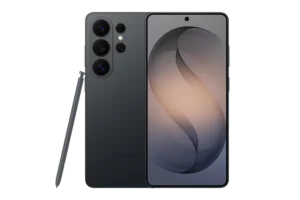
Samsung Galaxy S26 Ultra is a top-of-the-line Android smartphone powered by the strongest mobile processor, the Qualcomm Snapdragon 8 Gen Elite 5 (3nm) octa-core processor, which beats the A19 by 18% to 22% in multicore performance and is nearly identical in single-core performance.
The mobile phone comes with three storage options: 256GB, 512 GB, or 1 TB; the base and mid variants get 12GB RAM, 16GB RAM on the top variant. It also comes with an aluminum frame, which really helps thermal dissipation with its vapor chamber, which is almost 50% better than its predecessor. Powered by a Li-ion 5000 mAh battery.
Camera Specifications
It has a quad-camera setup that can record 8K at 30 fps, 4K up to 120 fps, and 1080p up to 240 fps. Also capable of recording 10-bit HDR and HDR10+. Samsung really did a great job with the video stabilizer; the brand calls it Super Steady Horizontal Lock stabilization, which feels like gimbal-like stabilization.
The Selfie camera can record HDR10+ at 4K 60fps
- Prime Lens: 200 MP, f/1.4
- Telephoto lens: 10 MP, f/2.4 with 3x optical zoom
- Periscope lens: 50 MP, f/2.9 with 5x zoom
- Ultrawide lens: 50 MP, f/1.9 (120˚)
- Selfie camera: 12 MP, f/2.2
Starting Price: ₹ 130999.
Xiaomi 17 Ultra

Xiaomi 17 Ultra comes in a 6.3-inch form factor; it is also equipped with the Qualcomm Snapdragon 8 Gen Elite 5. Unlike the other two mobile phone brands, it only features 16GB RAM and 512GB storage. For thermal control, it comes with 5500mm sq 3D dual-channel ice-loop cooling system and a 6000 mAh battery, which make it an ideal mobile phone for content creators.
Out of these, Xiaomi is really taking chances in terms of innovation, especially when it comes to the camera, with its 1-inch camera sensor that is really big for a mobile phone, making it perfect for low-light video recording without overprocessing.
Camera Specifications
Xiaomi 17 Ultra can capture footage at 8 K with 30fps, 4K up to 120fps, and 1080p at 1920fps, featuring 4K at 120 fps ACES LOG and Dolby Vision HDR recoding and the front camera can capture 4K at 60fps. It comes with a triple camera:
- Primary lens: 50 MP, f/1.7, 23mm (wide), 1.0″-type
- Periscope telephoto: 200 MP, f/2.4-3.0, 75-100mm, 1/1.4″
- Ultrawide:50 MP, f/2.2, 14mm, 115˚
- Selfie Camera: 50MP, f/2.2
Xiaomi promotes the 17 Ultra as a camera-centric smartphone with its rotating control ring that can be used to control zoom, aperture, shutter speed, and other camera settings, allow it user to use it with more precision.
Priced at ₹1,39,999
Comparison
| Mobile Phones | Processor & Thermals | Camera Features | Battery Rating | UI & Update Policy | Overall Rating |
| iPhone 17 Pro Max | A19 Pro: handles sustained workflow comfortably | Triple 48MP system: still the best when it comes to video performance | 50% charge in 20 minutes | Smooth, premium, and 5–7 years of immediate iOS rollouts. | 9.5/10 (Best premium with best constant video performance phone). |
| Samsung Galaxy S26 Ultra | Snapdragon 8 Gen Eite 5: fastest processor with top-tier thermals for heavy workflow | Quad Camera system with horizontal lock mode. Clearly | 5,000mAh battery that supports 60W fast charging | Smooth UI with 7 years of major OS & security updates. | 9.4/10 (Ultimate Android device for productivity & AI). |
| Xiaomi 17 Ultra | Snapdragon 8 Gen Eite 5: fastest processor with top-tier 3D independent micro-channel self-circulating cooling structure. | Leica-tuned system with a 1-inch ultra-dynamic LOFIC sensor and a 200MP stepless optical zoom. | Massive 6,000mAh Surge battery; lightning-fast 90W wired HyperCharge. | It might not feel as smooth or as polished as the other two, but Xiaomi offers 4 years of major Android updates alongside HyperOS 3. | 9.6/10 (The absolute king of mobile photography and videography hardware). |
Honorable Mention: Alternative Flagships to Consider
- Vivo 300 Ultra: A powerhouse that features a 200MP ZEISS APO Periscope telephoto lens, making it a dream device for stadium concerts and extreme distance zoom shots
- Oppo Find X9 Ultra: Good for mobile filmmakers, the device offers a premium Hasselblad Master camera system.
Best Phone Under ₹ 65,000 for Content Creation
This segment lies between ₹45,000 and ₹65,000; you will find a good, and packed with storng hardware mobile phone for video recording and video editing. This is a sweet spot for many buyers, and this segment covers almost everything from performance to visuals; however, you may find some smartphones with plastic frames or fewer cameras compared to premium mobile phones.
Vivo iQOO 15R
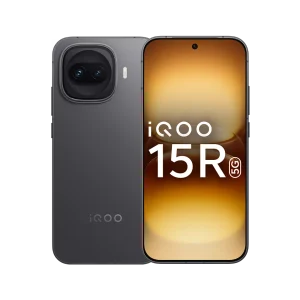
Vivo 15R is powered by Qualcomm Snapdragon 8 Gen 5. Memory options include 8 GB RAM with 256GB, 12GB with 256GB, and 12GB with 512 GB, a vapor chamber for thermal control, and a huge 7600 mAh battery. It also has Wi-Fi 7 for fast connectivity.
Camera Specification
The mobile has duel camera setup that can record 4K at 60 fps, capable of recording HDR footage, and the front camera can record 4K at 30 fps.
- Primary lens: 50MP, f/1.8
- Ultrawide lens: 8MP, 1/2.2
With its 7600 mAh battery and 100W charging support, it makes it a capable and reliable smartphone for content creators. My suggestion is to pick the 12 GB with 256GB storage variant priced at ₹59,999.00 on Vivo’s official website.
Motorola Edge 70 Max

Another smartphone with Qualcomm Snapdragon 8 Gen 5; the mobile phone has smooth and a stock like UI, which enhances the user experience. Also featuring memory options of 8GB with 256GB and 12 with 256GB. It is also packed with a 7100mAh battery and capable of 10 hours of video recoding in single charge.
Camera specs
It comes with a dual camera system that can record 4K at 60 fps in HDR10+, and FHD slow motion at 240 fps.
- Main camera: 50MP, f/1.8
- Ultrawide camera: 8MP, f/2.2
It is priced at ₹59,999, and with a strong hardware combination and refined UI makes it a good choice.
Xiaomi 17T
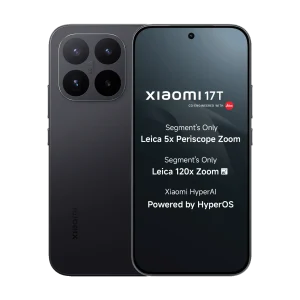
At its core, the MediaTek Dimensity 8500 Ultra(4nm), a memory combination of 12GB RAM and 256GB storage, a 6500mAh battery, and the only smartphone that can record 4K Log video make it a versatile device for content creators.
Camera Details
Featuring a triple camera system capable of shooting 4K at 60fps and 1080p at up to 690fps also supports 10-bit Rec, HDR, and Log.
- Main camera: 50 MP, f/1.7
- Periscope telephoto lens: 50 MP, f/3.0 with 5x optical zoom
- Ultrawide lens: 12 MP, f/2.2
- Front camera: 32 MP, f/2.2
The processor may seem lacking when it is compared to the other two mobile phones; however, its log video capability and nighttime footage make it leap ahead of other phones that come in this segment.
Priced at ₹64,999
Comparison
| Mobile Phones | Processor & Thermal | Camera Features | Battery Rating | UI & OS Update Policy | Overall Rating |
|---|---|---|---|---|---|
| Vivo iQOO 15R | Snapdragon 8 Gen 5 + Vapor Chamber | 4K 60fps, HDR, 4K 30fps front camera | 7600 mAh battery | 4 years of major Android updates and 6 years of total security updates | 9.0/10 |
| Motorola Edge 70 Max | Snapdragon 8 Gen 5 + strong thermal hardware | 4K 60fps HDR10+, 1080p 240fps slow motion | 7100 mAh | Near-stock UI; 3 years of major OS updates and a total of 5 years of security updates | 8.8/10 |
| Xiaomi 17T | Dimensity 8500 Ultra + thermal system | 4K 60fps, 10-bit Rec, HDR, Log, 5x telephoto, 690fps slow motion | 6500 mAh | HyperOS; 5 major Android updates and 6 years of total security updates | 9.1/10 |
Best Phones Under ₹45,000 for Video Editing
For 4K video recording and editing, a smartphone needs a capable processor, fast memory and storage, and a bright, color-accurate display. Since this list focuses on the entry-level segment, all recommended smartphones are priced under ₹45,000.
OnePlus Nord CE6

The OnePlus Nord CE6 offers a clean user interface, while its Qualcomm Snapdragon 7s Gen 4 processor, built on a 4nm process, is paired with 8GB of RAM and 128GB of storage. This combination makes it a capable option in this segment for everyday video editing.
The device packs a large 8,000mAh battery and a dedicated 5,000mm² vapor chamber to help manage heat during sustained workloads. Its 6.78-inch AMOLED display with a 144Hz refresh rate and HDR support provides a smooth and responsive experience when working with video-editing timelines.
Camera Specification
It can record 4K at 30fps and1080p at up to 120fps with its 50MP camera; it comes with a single lens for the main camera and an auxiliary lens. The selfie camera can also shoot footage in 4 K at 30 fps.
- Main lens: 50 MP, f/1.8
- Selfie lens: 32MP, f/2.0
It is priced at ₹ 37,999 for 8GB and 128 GB ROM and ₹ 41,999 for 8GB and 256GB ROM
Redmi Note 15 Pro Plus
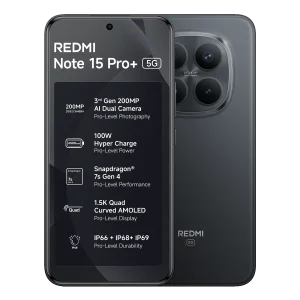
The Redmi Note 15 Pro+ features a large 6.83-inch AMOLED display with support for HDR10+ and Dolby Vision. At its core, it is powered by the Snapdragon 7s Gen 4 processor, built on a 4nm process. It is available in two memory configurations: 8GB RAM with 256GB storage and 12GB RAM with 256GB storage.
Powering the device is a large 6,500mAh battery, while sustained performance is handled by Xiaomi’s dedicated IceLoop cooling system, featuring a 5,200mm² cooling area designed to help manage heat during demanding tasks such as 4K video recording and editing.
Camera specification
- Main lens: 200 MP, f/1.7
- Ultrawide lens: 8 MP, f/2.2
- Selfie lens: 32MP f/2.2
It is available in two variants. The 12GB RAM + 256GB storage variant offers the best value for money at ₹41,999, while the 8GB RAM + 256GB storage variant is priced at ₹39,999.
Motorola Edge 70 Fusion

Motorola features 6.8- inche, AMOLED, 144Hz display with HDR10+ support on this device. Its strength comes from the Snapdragon 7s Gen 4 (4nm) processor. This is supported by a dedicated 4473mm² vapor chamber for sustained performance. It comes with four memory options, but I will sugest look for 12 GB with 256 ROM.
Camera details
It can also shoot 4 K at 30 fps from both the front and main cameras. It can shoot 1080p at up to 120 fps; however, the selfie camera is limited to 30 fps.
- Primary lens: 50 MP, f/1.8
- Ultrawide lens: 13 MP, f/2.2, 120˚
- Front Camera: 32 MP, f/2
It is priced at ₹ 34,999 for 12 GB RAM with 256GB storage. It is the only mobile in this price range that delivers value for money at this price cap.
| Mobile Phones | Processor & Thermals | Camera Features | Battery | UI & Update Policy | Overall Rating |
|---|---|---|---|---|---|
| OnePlus Nord CE6 | Snapdragon 7s Gen 4 (4nm) + 5,000mm² vapor chamber. Good sustained performance for everyday editing. | 50MP main + auxiliary lens. 4K/30fps from rear and front; 1080p up to 120fps. | 8,000mAh — excellent capacity for extended editing and recording sessions. | Clean, lightweight UI. Update support is a consideration depending on long-term software requirements. | 8.5/10 |
| Redmi Note 15 Pro+ | Snapdragon 7s Gen 4 (4nm) + 5,200mm² IceLoop cooling. Strong thermal setup for sustained workloads. | 200MP main + 8MP ultrawide + 32MP selfie. Strongest camera hardware of the three on paper. | 6,500mAh — very good capacity for video recording and editing. | Feature-rich Xiaomi UI with extensive customization. Long-term update policy should be considered. | 8.6/10 |
| Motorola Edge 70 Fusion | Snapdragon 7s Gen 4 (4nm) + 4,473mm² vapor chamber. Good balance of performance and thermal management. | 50MP main + 13MP ultrawide + 32MP selfie. 4K/30fps from both rear and front; 1080p up to 120fps from rear. | Not specified in your draft — add the battery capacity before publishing. | Clean, near-stock UI with a relatively uncluttered experience. | 8.7/10 |
Final Verdict
Choosing the best smartphone for 4K video recording and editing is not simply about picking the phone with the highest camera megapixel count. A capable processor, effective thermal management, sufficient RAM and storage, a good display, battery capacity, and reliable software all contribute to a smooth content-creation workflow.
For buyers looking for the best overall video-recording experience, the iPhone 17 Pro Max stands out in the premium segment because of its strong video capabilities, including 4K recording at up to 120fps, Dolby Vision HDR, and Log video support. It is particularly well suited to creators who want consistent video quality and a mature editing ecosystem.
Among Android flagships, the Xiaomi 17 Ultra is an excellent choice for creators who prioritize camera hardware and photographic flexibility. Its large 1-inch primary sensor, 200MP periscope telephoto camera, 8K recording, 4K 120fps support, and strong cooling system make it a powerful option for serious mobile filmmaking.
In the mid-range segment, the Xiaomi 17T is one of the most interesting choices for content creators. Its support for 4K 60fps, 10-bit recording, HDR, and Log video gives creators greater flexibility during post-production. The Vivo iQOO 15R is another strong option, particularly for users who prioritize processing performance, battery life, and sustained workloads.
For buyers with a budget below ₹45,000, the Motorola Edge 70 Fusion offers the strongest value in this list, with a Snapdragon 7s Gen 4 processor, dedicated vapor-chamber cooling, 12GB RAM + 256GB storage, and 4K recording from both the front and rear cameras. The Redmi Note 15 Pro+ is worth considering if camera hardware and display quality are higher priorities, while the OnePlus Nord CE6 makes sense for users who value clean software and a large battery.
Ultimately, the right smartphone depends on your workflow. If you regularly shoot and edit professional-looking 4K footage, investing in a premium model provides the greatest flexibility. For most creators, however, a well-equipped mid-range or upper-entry-level smartphone can provide enough performance for 4K recording and everyday mobile editing without the cost of a flagship.
Further reading
Frequently Asked Questions
1. Which is the best smartphone for 4K video editing?
The iPhone 17 Pro Max is the strongest overall choice in this list for 4K video recording and editing. It combines high-end processing performance with 4K 120fps recording, Dolby Vision HDR, and Log video support.
2. Do I need a flagship smartphone for 4K video editing?
No. A flagship is not essential for everyday 4K editing. Mid-range and upper-entry-level smartphones can handle many 4K editing tasks, provided they have a capable processor, sufficient RAM, fast storage, and effective thermal management.
3. How much RAM is recommended for smartphone video editing?
For regular video editing, 8GB of RAM is a reasonable starting point, while 12GB or more is preferable for heavier projects, multitasking, and longer editing sessions.
4. Is 128GB storage enough for 4K video editing?
128GB can work for occasional editing, but 256GB is a better choice for content creators. 4K footage can consume storage quickly, especially when you keep original footage, project files, editing assets, and exported videos on the phone.
5. Is a high refresh-rate display important for video editing?
A high refresh rate makes the interface and timeline scrolling feel smoother, but it is not the most important display specification for editing. Color accuracy, brightness, resolution, HDR support, and panel quality are more important when evaluating a smartphone for video work.
6. Does thermal management matter when editing 4K videos?
Yes. Video recording, rendering, and exporting can place sustained loads on the processor. A vapor chamber or other effective cooling system can help manage heat and maintain performance during longer workloads.
7. Which is better for creators: more megapixels or better video features?
More megapixels do not automatically mean better video. For content creation, features such as 4K 60fps or 120fps recording, HDR, Log recording, stabilization, sensor quality, and consistent thermal performance can be more important than the camera’s megapixel count.
8. Which smartphone is the best value for video editing under ₹45,000?
Based on the phones covered in this guide, the Motorola Edge 70 Fusion offers the strongest value proposition, particularly in its 12GB RAM + 256GB configuration. The Redmi Note 15 Pro+ is another compelling option for users who prioritize camera hardware and display quality.
9. Is battery life important for mobile video editing?
Yes. Video recording and editing can consume considerably more power than everyday tasks. A large battery can provide greater flexibility for longer recording sessions and editing away from a charger.
10. Can I edit professional 4K videos on a smartphone?
Yes, particularly on higher-end smartphones. Flagship devices offer the processing power, storage speeds, camera capabilities, and thermal management needed for demanding 4K workflows.
However, the experience will still depend on the editing application, project complexity, codec, resolution, and effects being used.