
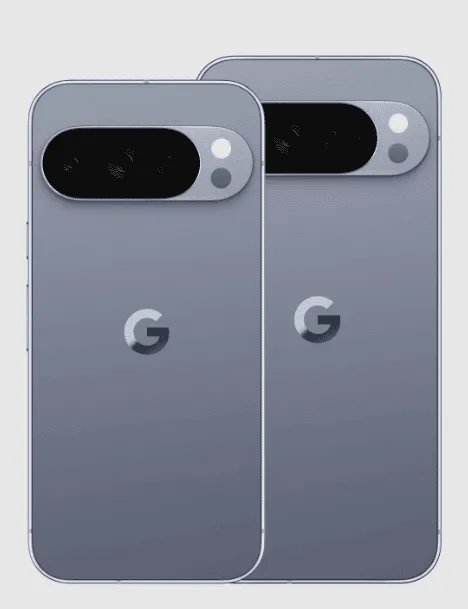
Google’s Pixel 10 lineup now consists of five smartphones that cater to different types of users, ranging from the affordable Pixel 10a to the premium Pixel 10 Pro Fold. While the flagship models debut Google’s latest Tensor G5 chipset, the Pixel 10a continues with the previous-generation Tensor G4 processor. This comparison explores pricing, display quality, performance, cameras, AI capabilities, battery life, and software support to help you choose the right Pixel smartphone.
Table of Contents
The Changes Across the Lineup
Google has refined its Pixel portfolio rather than reinventing it. The biggest hardware upgrade comes with the new Tensor G5 chipset, manufactured by TSMC using a 3nm process, bringing improved thermal efficiency and better sustained performance. The standard Pixel 10 also receives a significant camera upgrade by adding a dedicated telephoto lens, while the Pro models continue to focus on premium photography and AI-powered experiences.
The Pixel 10a remains Google’s value-oriented option, delivering the familiar Pixel software experience without the flagship price tag. Meanwhile, the Pixel 10 Pro Fold continues to serve users looking for multitasking on a foldable display.
Pixel Lineup Price Comparison
Google’s Pixel family spans a wide price range, making it easier to find a model that fits different budgets.
| Model | Approximate Price (India) |
|---|---|
| 10a | ₹49,999 |
| 10 | ₹79,999 (available around ₹66,150 during offers) |
| 10 Pro | ₹1,08,999 |
| 10 Pro XL | ₹1,24,999 |
| 10 Pro Fold | ₹1,72,999 |
Note: Actual retail prices frequently change due to online sales, bank offers, exchange bonuses, and seasonal discounts.
The Pixel Lineup: Display Comparison
Although Google hasn’t drastically changed the display technology, brightness has received a noticeable boost across nearly every model. High Brightness Mode (HBM) is approximately 200 nits brighter than before, while peak HDR brightness increases by nearly 300 nits. All premium models continue to support smooth 120Hz refresh rates and HDR10+, delivering excellent visibility outdoors and fluid scrolling.
| Model | Display Specifications |
|---|---|
| Pixel 10 | 6.3-inch OLED, 2000 nits (HBM), 3000 nits peak brightness |
| 10 Pro | 6.3-inch LTPO OLED, 2200 nits (HBM), 3300 nits peak brightness |
| 10 Pro XL | 6.8-inch LTPO OLED, 2200 nits (HBM), 3300 nits peak brightness |
| 10 Pro Fold | 6.4-inch Cover Display: 1800 nits (HBM), 3000 nits Peak 8-inch Foldable Display: 2000 nits (HBM), 3000 nits Peak |
| 10a | 6.3-inch P-OLED, 2000 nits (HBM), 3000 nits peak brightness |
The Pro models continue to stand out thanks to their LTPO panels, which dynamically adjust refresh rates to improve battery efficiency while maintaining smooth animations. The 10a offers impressive brightness for its price, while the Pixel 10 Pro Fold delivers an expansive display that excels at productivity, reading, gaming, and multitasking.
Pixel Lineup: Performance and Processor Differences
The biggest technical improvement across the 10 series is Google’s transition to the new Tensor G5 processor, manufactured by TSMC on a 3nm fabrication process. Previous Tensor chips, including the Tensor G4, were produced by Samsung using a 4nm process and were often criticized for thermal throttling under sustained workloads.
The new manufacturing process significantly improves thermal efficiency, allowing the 10, 10 Pro, 10 Pro XL, and 10 Pro Fold to maintain higher performance for longer periods. During extended gaming sessions, devices powered by Tensor G5 remain noticeably cooler than previous generations while providing smoother frame rates.
However, despite Google’s marketing claims, the overall day-to-day user experience does not dramatically differ from Tensor G4 for common activities such as browsing, social media, photography, messaging, and video streaming. The primary advantage lies in sustained workloads, AI processing, and improved power efficiency.
Benchmark scores also tell an interesting story. While laboratory testing shows Tensor G5 crossing the one-million-point mark in AnTuTu, real-world testing often produces scores close to that threshold rather than significantly exceeding it.
Real-world observation: Tensor G5 primarily improves thermal management, AI acceleration, and battery efficiency rather than delivering a massive leap in everyday speed.
Meanwhile, the 10a continues using the Tensor G4 processor from the previous generation. Although it remains perfectly capable for everyday applications, it offers little improvement over the Pixel 9a in terms of raw processing power.
Pixel Lineup: RAM and Storage Configuration
Memory configurations differ significantly throughout the Pixel lineup. While the standard Pixel 10 retains 12GB RAM, Google’s premium models increase memory to 16GB in order to support increasingly demanding on-device Gemini AI features and advanced multitasking.
Storage options also vary between models. The Pixel 10 Pro offers the widest selection, starting at 128GB and extending to 1TB, whereas the larger Pro XL and Pro Fold begin at 256GB and omit the 128GB variant entirely.
| Model | RAM | Storage Options |
|---|---|---|
| 10 | 12GB | 128GB / 256GB |
| 10 Pro | 16GB | 128GB / 256GB / 512GB / 1TB |
| 10 Pro XL | 16GB | 256GB / 512GB / 1TB |
| 10 Pro Fold | 16GB | 256GB / 512GB / 1TB |
| 10a | 8GB | 128GB / 256GB |
For most users, 12GB RAM on the Pixel is already more than sufficient. Heavy multitaskers, AI enthusiasts, content creators, and professionals who frequently use on-device machine learning tools will benefit from the 16GB memory available on the Pro models.
Camera Capabilities
Photography remains one of the strongest reasons to choose a Pixel smartphone. Google has refined camera hardware across the lineup while continuing to rely heavily on computational photography and AI-powered image processing.
Pixel 10
The standard Pixel 10 receives its biggest camera upgrade yet by introducing a dedicated telephoto camera alongside the primary and ultrawide sensors. It now features:
- 48MP primary camera
- 10.8MP telephoto lens
- 13MP ultrawide camera
- 10.5MP front-facing camera
Pixel 10 Pro & Pixel 10 Pro XL
Google’s flagship Pro models retain one of the industry’s strongest camera systems:
- 50MP primary sensor
- 48MP periscope telephoto (5x optical zoom)
- 48MP ultrawide camera
- 42MP selfie camera
Both models deliver flagship-level photography with improved HDR processing, better low-light performance, and advanced AI editing tools.
Pixel 10 Pro Fold
To maintain its slim foldable design, the Pixel 10 Pro Fold uses a slightly different camera configuration:
- 48MP primary camera
- 10.8MP telephoto (5x optical zoom)
- 10.5MP ultrawide camera
- Dual 10MP selfie cameras
Pixel 10a
Google’s affordable model continues with a capable dual-camera setup:
- 48MP primary camera
- 13MP ultrawide camera
- 13MP selfie camera
Video Recording
Video recording capabilities differ depending on the model.
| Model | Maximum Video Recording |
|---|---|
| 10 Pro / Pro XL | 8K (30fps via AI upscaling), Native 4K 60fps |
| Pixel 10 | 4K 60fps |
| 10 Pro Fold | 4K 60fps |
| 10a | 4K 60fps rear, 4K 30fps front |
Google also reserves premium features such as 10-bit HDR video recording for the Pixel 10, Pixel 10 Pro, Pixel 10 Pro XL, and Pixel 10 Pro Fold, while the Pixel 10a does not support 10-bit color recording.
Pixel 10 Lineup: Next-Gen AI Capabilities
Artificial Intelligence continues to be Google’s biggest competitive advantage. Powered by localized Gemini AI models, the Pixel 10 lineup introduces smarter on-device processing while reducing dependence on cloud computing.
On-Device Context Awareness
Gemini AI understands what is currently displayed on your screen and intelligently suggests reminders, summaries, actions, and contextual shortcuts without uploading personal information to Google’s servers.
The Daily Information Hub
Google integrates weather forecasts, calendar events, travel updates, reminders, and commute information into personalized widgets that automatically adapt throughout the day.
Gemini Live
Gemini Live enables natural conversations with Google’s AI assistant. Users can ask follow-up questions, receive spoken answers, identify objects through the camera, and maintain continuous conversations with contextual memory.
Live Translate
Live Translate now supports real-time translation during phone calls and messaging conversations across dozens of languages. Google’s machine learning models can even preserve speaking style and natural vocal tone to make multilingual conversations feel more authentic.
AI Highlight: The 10 Pro models deliver the best on-device AI experience thanks to their Tensor G5 processor and 16GB RAM, allowing more Gemini features to run locally without requiring cloud processing.
Pixel Lineup: Software Longevity vs. Real-World Battery Life
One of the biggest reasons to buy a Pixel smartphone continues to be Google’s clean Android experience. The Pixel lineup ships with the latest version of Android, free from unnecessary bloatware, while receiving regular Pixel Feature Drops that introduce new functionality throughout the device’s life cycle.
Google also maintains one of the industry’s strongest software commitments by promising up to seven years of Android OS upgrades, security patches, and Pixel-exclusive feature updates. This makes every Pixel 10 model a long-term investment for users who keep their smartphones for several years.
Battery life, however, is more balanced than groundbreaking. While the new Tensor G5 processor significantly improves thermal efficiency and reduces overheating during gaming or demanding workloads, the overall endurance still trails behind some competing flagship smartphones with larger batteries and more aggressive power optimization.
The Pixel 10 Pro XL delivers the best battery performance in the lineup thanks to its larger battery capacity, while the Pixel 10 Pro Fold prioritizes portability and multitasking over maximum endurance. The Pixel 10a surprisingly offers excellent battery life because of its efficient hardware and lower processing demands.
| Model | Battery Capacity |
|---|---|
| 10 | 4,970 mAh |
| 10 Pro | 4,870 mAh |
| 10 Pro XL | 5,200 mAh |
| 10 Pro Fold | 5,015 mAh |
| 10a | 5,100 mAh |
Battery Verdict: The Pixel 10 Pro XL offers the best balance of performance and endurance, while the Pixel 10a provides excellent battery life for budget-conscious users.
Which Pixel Lineup Should You Buy?
Buy the Pixel 10a if:
- You want the most affordable Pixel smartphone.
- Your daily activities include browsing, social media, messaging, and streaming.
- Long software support matters more than flagship performance.
- You want excellent battery life without spending flagship-level money.
Buy the Pixel 10 if:
- You want Google’s newest Tensor G5 processor.
- You prefer a compact flagship smartphone.
- You want a dedicated telephoto camera without paying Pro prices.
- You value flagship software features at a lower cost.
Buy the 10 Pro if:
- You want the best balance between size and premium hardware.
- Photography is one of your highest priorities.
- You regularly use advanced AI features.
- You prefer a compact flagship with flagship cameras.
Buy the 10 Pro XL if:
- You prefer a large display for gaming, productivity, and entertainment.
- Battery life is extremely important.
- You need storage options up to 1TB.
- You want Google’s most complete traditional flagship.
Buy the 10 Pro Fold if:
- You specifically want a foldable smartphone.
- You frequently multitask using split-screen apps.
- You consume lots of content on a larger display.
- You want Google’s premium foldable experience.
Final Verdict
The Google Pixel lineup offers something for nearly every type of smartphone user. The Pixel 10a continues to be one of the strongest value-oriented Android smartphones thanks to its affordable pricing, long software support, and dependable cameras.
The standard Pixel 10 introduces meaningful upgrades, including the Tensor G5 processor and a dedicated telephoto camera, making it an excellent choice for users seeking flagship features without entering premium pricing territory.
For photography enthusiasts and power users, the Pixel 10 Pro and Pixel 10 Pro XL remain the most complete devices in Google’s portfolio, combining exceptional cameras, advanced AI capabilities, premium displays, and years of software updates.
Meanwhile, the Pixel 10 Pro Fold is designed for users who prioritize multitasking and productivity while remaining inside Google’s ecosystem. Although foldables still command a premium price, the Pro Fold delivers a unique experience unavailable on traditional smartphones.
Ultimately, choosing the right Pixel depends on your budget, camera requirements, display preference, and whether you value cutting-edge AI features or foldable productivity. Regardless of the model, Google’s commitment to long-term software support ensures that every Pixel 10 device remains a competitive Android smartphone for years to come.
Frequently Asked Questions (FAQs)
Which Pixel model offers the best value for money?
The Pixel 10 provides the best overall balance of performance, cameras, AI features, and price, making it the ideal choice for most buyers.
Does the Pixel 10a use the Tensor G5 processor?
No. The Pixel 10a continues to use Google’s Tensor G4 chipset, while the rest of the Pixel 10 lineup features the newer Tensor G5 processor.
Which Pixel 10 phone has the best cameras?
The Pixel 10 Pro and Pixel 10 Pro XL offer Google’s most advanced camera systems, including a 50MP primary sensor, a 48MP periscope telephoto lens with 5x optical zoom, and a 48MP ultrawide camera.
How long will Google support the Pixel 10 lineup?
Google promises up to seven years of Android OS upgrades, security patches, and Pixel Feature Drops for the Pixel 10 series.
Which Pixel 10 model has the best battery life?
The Pixel 10 Pro XL offers the largest battery in the lineup at 5,200mAh, making it the best choice for users who prioritize long-lasting battery life.