NVIDIA Vera: The Custom CPU Built to Dominate AI Servers
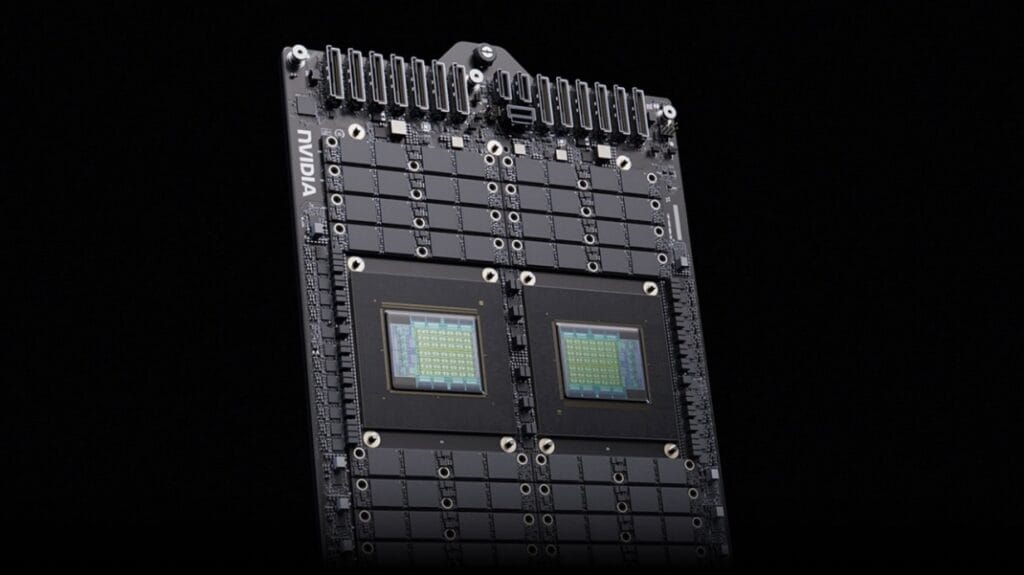
Table of Contents
For more than a decade, NVIDIA’s rise in AI has been fueled by its industry-leading GPUs. However, as artificial intelligence evolves beyond simple model training and into agentic AI systems capable of reasoning, planning, and executing complex tasks, the company is expanding its ambitions beyond graphics processors.
Enter Vera, NVIDIA’s next-generation custom CPU platform designed specifically for AI infrastructure. Unlike traditional x86 server processors that prioritize broad, general-purpose computing, Vera features custom ARM-based Olympus cores optimized for the data-intensive demands of modern AI workloads. By tightly integrating CPU and GPU resources, NVIDIA aims to deliver a more efficient foundation for the next wave of AI servers.
According to NVIDIA founder and CEO Jensen Huang, Vera was designed specifically for the age of agentic AI, where AI systems increasingly perform complex reasoning and autonomous tasks. NVIDIA claims the processor can deliver up to 1.8× higher performance than conventional server CPUs, while major AI companies such as Anthropic, OpenAI, and SpaceX have already emerged as early adopters of the platform.
With AI data centers expected to expand rapidly throughout 2026 and beyond, Vera could become one of NVIDIA’s most important products yet, helping the company strengthen its position across the entire AI computing stack rather than GPUs alone. Here is a closer look at the architectural innovations driving this platform.
NVIDIA Vera: CPU Designs & The Olympus Core
The standout feature of Vera is NVIDIA’s new Olympus CPU core architecture, which has been designed specifically for the demands of AI agents and large-scale AI workloads rather than traditional, human-centric computing tasks.
Vera integrates 88 Olympus cores and is claimed to deliver up to twice the performance of its predecessor while drastically improving overall energy efficiency. This architecture is based on the Armv9.2 instruction set and features native support for FP8 precision—a data format increasingly favored in modern AI workloads to maximize throughput. To prevent data bottlenecks, NVIDIA has equipped Olympus with Spatial Multithreading and a high-bandwidth LPDDR5X memory subsystem capable of delivering an unprecedented 1.2 TB/s of memory bandwidth.
A major engineering focus of Olympus is instructions-per-cycle (IPC) performance. NVIDIA is targeting approximately 1.5× the IPC of Grace, representing a substantial generational leap considering that nearly four years have passed since the Grace architecture was introduced.
To achieve this milestone, Olympus features a massive 10-wide instruction decode engine. This allows the processor to decode and dispatch a significantly larger number of instructions every clock cycle. When sufficient instruction-level parallelism is available, this wider front-end keeps more execution resources active simultaneously, helping the CPU sustain peak performance across the most demanding data-center workloads.
NVIDIA Vera Features
| Featurs | Specs |
| Cores | 88 |
| Threads | 176 (spatial multithreading) |
| Memory Bandwidth | up to 1.2 TB/s |
| Memory Capacity | up to 1.5 TB/s LPDDR5X |
| CPU Architecture | NVIDIA Olympus |
| PCLe / CXL | Gen 6 / CXL 3.1 |
| NVLINK-C2C | 1.8 TB/s |
| SIMD | 6x 128b SVE2 FP8 |
| L2 Cache Per Core | 2 MB |
| Unified L3 Cache | 162 MB |
The platform is built around the new Olympus CPU architecture and features 88 cores with support for 176 threads through Spatial Multithreading. It is designed to handle the demanding data movement and processing requirements of modern AI workloads.
Vera supports up to 1.5 TB of LPDDR5X memory and delivers up to 1.2 TB/s of memory bandwidth, providing the processor with rapid access to large datasets. The platform also integrates NVLink-C2C with up to 1.8 TB/s of interconnect bandwidth, enabling high-speed communication between CPUs and GPUs. Additional connectivity features include PCIe Gen 6 and CXL 3.1 support for next-generation accelerators and memory expansion.
One of Vera’s most notable advantages is its memory subsystem. Compared to many traditional server processors, its combination of high memory capacity and bandwidth is particularly well-suited for AI inference, agentic AI, and large-scale data-center workloads. This high-bandwidth design helps keep the Olympus cores supplied with data, reducing potential bottlenecks and allowing the processor to better utilize its compute resources under demanding workloads.
NVIDIA Vera Unlocking Hyperscale Scale: PCIe Gen 6 and CXL 3.1 Integration
Raw compute power means very little if the processor is starved for data. To ensure the 88 Olympus cores remain fully saturated, NVIDIA has integrated next-generation connectivity standards: PCIe Gen 6 and Compute Express Link (CXL) 3.1.
PCIe Gen 6 effectively doubles the bandwidth of the previous generation, ensuring that auxiliary accelerators and ultra-fast NVMe storage arrays can communicate with the CPU without lag. Meanwhile, CXL 3.1 introduces advanced memory pooling and sharing capabilities. This allows multiple Vera CPUs to seamlessly share a massive pool of system memory, virtually eliminating data duplication and radically lowering latency during massive AI inference tasks. Combined with the staggering 1.8 TB/s offered by the proprietary NVLink-C2C interface, Vera transforms a server from a collection of isolated parts into a singular, cohesive computational engine.
Shaking Up the Server Market: NVIDIA Vera vs. x86 Giants
For decades, the data center CPU market has been fiercely contested by Intel and AMD using traditional x86 architecture. By launching Vera, NVIDIA is not just optimizing its own AI clusters—it is launching a direct assault on the traditional server landscape.
While AMD’s EPYC and Intel’s Xeon processors excel at broad, general-purpose enterprise applications, they often struggle with the hyper-specific, massive data pipelines required by LLMs and autonomous agents. Vera’s custom Armv9.2 architecture bypasses legacy x86 inefficiencies. By eliminating the typical latency bottlenecks found when pairing an x86 CPU with an NVIDIA GPU, the Vera-powered infrastructure offers cloud providers a massive total cost of ownership (TCO) advantage. For hyperscalers like Microsoft Azure, AWS, and Google Cloud, the promise of 1.8× higher performance means they can extract significantly more power out of every square foot of data center floor space.
Conclusion: NVIDIA Vera Expanding the AI Empire
Its success in the AI era has largely been built on pioneering GPU technology. With NVIDIA Vera, however, the company is demonstrating that its ambitions extend far beyond accelerators alone. By developing a custom, high-bandwidth CPU architecture from the ground up, NVIDIA is taking another step toward controlling every major component of the modern AI data center.
As leading AI companies such as OpenAI and Anthropic begin adopting next-generation AI infrastructure, the server market could undergo a significant transformation. Vera is more than just a new processor—it reflects a broader industry shift toward specialized hardware designed for AI workloads. Rather than relying solely on general-purpose computing, future data centers may increasingly depend on purpose-built architectures optimized for the demands of autonomous and reasoning AI systems.
If brands’ vision proves successful, NVIDIA Vera could become a key building block in the next generation of AI infrastructure, further strengthening the company’s influence across the entire AI computing stack.