
Why High-VRAM GPUs Aren’t the Future of Gaming and AI
Table of Contents

For years, GPU buyers believed one thing: more VRAM automatically meant a more future-proof graphics card. Brands pushed 16GB, 24GB, and even 32GB GPUs as the ultimate solution for gaming, AI workloads, and next-generation applications. But in 2026, that idea is starting to crack.
Raw VRAM capacity alone no longer guarantees better real-world performance. Modern GPUs are increasingly limited by memory bandwidth, AI accelerators, power efficiency, software optimization, and architectural efficiency rather than simply how much memory they carry. A poorly balanced GPU with massive VRAM can still lose badly to a smarter, more efficient chip with less memory but superior architecture.
The future of computing is shifting toward intelligent memory management, faster interconnects, on-device AI acceleration, and unified memory systems instead of simply stuffing GPUs with larger memory pools. High-VRAM graphics cards will still matter for niche creators, AI researchers, and enterprise professionals. Still, for most gamers and mainstream users, they are no longer the ultimate measure of longevity.
In this article, we explore why the “more VRAM = better future” mindset is fading — and what will actually define next-generation GPU performance.
Unified Memory Expands Beyond Traditional VRAM Limits
Instead of relying on a small pool of ultra-fast memory attached directly to the GPU, unified memory allows the CPU and GPU to share a single, large, coherent memory pool. This eliminates the need for constant, power-hungry data transfers across a separate memory bus, improving efficiency in workloads involving local AI processing, large datasets, and professional content creation.
Major companies, including Apple and AMD, are aggressively moving toward memory architectures that blur the traditional line between system memory and standalone VRAM
M3 Ultra Mac Studio
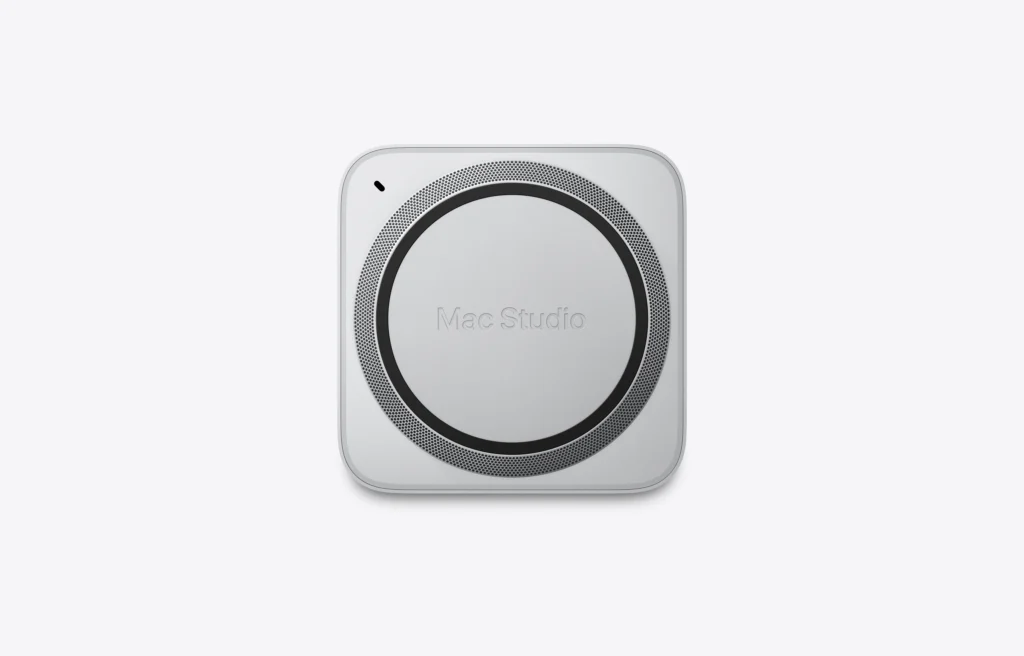
The M3 Ultra architecture is a powerhouse workstation design built to handle demanding enterprise and artificial intelligence workloads. It packs an astonishing 184 billion transistors, starts with 96GB of high-bandwidth, low-latency unified memory, and can be configured up to an unprecedented 192GB pool.
Because CPU and GPU components access the exact same physical memory pool dynamically, the system completely bypasses the traditional bottleneck of copying data over a motherboard bus. An AI developer can use nearly the entirety of this unified pool to fit massive Large Language Models (LLMs) that would otherwise require multiple daisy-chained desktop graphics cards.
However, Apple also offers more affordable alternatives, including the Mac Mini M4 and M4 Pro series. Users considering an upgrade may also wonder whether waiting for the future Mac Mini M5 makes more sense, or if the current M4 lineup still delivers enough performance and value in 2026.
AMD Ryzen AI Max+ 395
The AMD Ryzen AI Max+ 395 represents a major shift in mobile computing. Built on AMD’s next-generation Strix Halo architecture, this processor combines high-end CPU performance, powerful integrated graphics, and dedicated AI acceleration into a single package.
The AMD Ryzen AI Max+ 395 represents a massive architectural shift for high-performance laptops and compact systems. Instead of relying on a restricted, standalone pool of dedicated VRAM, this flagship system-on-chip utilizes an 8-channel, 256-bit LPDDR5X-8000 unified memory architecture.
- Desktop-Class Processing: 16 next-generation Zen 5 CPU cores and 32 threads capable of boosting up to 5.1 GHz.
- Massive Cache Pipeline: 64 MB of unified L3 cache to dramatically minimize internal processing latency.
- Elite Integrated Graphics: An onboard Radeon 8060S iGPU packing 40 RDNA 3.5 Compute Units, rivalling discrete mid-range desktop graphics cards.
- Dedicated Local AI Engines: An integrated XDNA 2 Neural Processing Unit (NPU) delivering over 50 TOPS of dedicated hardware acceleration.
The Strix Halo Architecture: Destroying the VRAM Bottleneck
By deploying a massive 256-bit wide memory bus—double the width of traditional laptop memory interfaces—the system achieves over 256 GB/s of shared bandwidth. Under heavy generative AI workloads, the system can dynamically allocate up to 96GB of system RAM as pure VRAM, allowing mobile creators to run local AI models on compact machines that historically required bulky, power-hungry desktops.
AI-Focused Unified Memory Systems Are Expanding
Unified memory is no longer limited to ultra-expensive workstations. AMD is also pushing AI-focused memory architectures into portable systems, including devices like the Asus TUF A14 powered by the Ryzen AI Max+ 392 processor.
These newer systems are designed to allocate memory more dynamically between AI accelerators, CPU workloads, and GPU tasks, reducing reliance on extremely large dedicated VRAM pools while improving efficiency for modern AI-assisted applications.
VRAM vs Unified Memory: Key Differences
| Feature | Traditional VRAM | Unified Memory |
|---|---|---|
| Memory Design | Dedicated memory attached directly to the GPU | Shared memory pool between CPU and GPU |
| Data Transfer | Requires data copying across memory buses | Eliminates constant back-and-forth transfers |
| Bandwidth | Extremely high bandwidth optimized for graphics workloads | Balanced bandwidth shared across multiple processors |
| Latency | Very low for GPU-specific tasks | Optimized for system-wide efficiency |
| Gaming Performance | Excellent for high-refresh gaming and ray tracing | Efficient, but not always optimized for peak gaming workloads |
| AI Workloads | Strong for dedicated GPU compute tasks | Better for large shared AI datasets and memory-heavy workflows |
| Power Efficiency | Higher power consumption under heavy load | Generally more power-efficient |
| Scalability | Limited by dedicated VRAM capacity | Can scale into very large shared memory pools |
| Upgradability | Depends on GPU hardware | Usually integrated and non-upgradable |
| Best Use Cases | Gaming PCs, rendering GPUs, enthusiast desktops | AI systems, content creation, portable workstations |
| Real-World Limitation | Large VRAM alone does not guarantee better performance | Shared bandwidth can become a bottleneck in some workloads |
| Industry Adoption | Common in traditional desktop GPUs | Increasingly used in AI-focused and modern hybrid architectures |
Why High VRAM Alone Is No Longer Enough
The GPU industry is gradually moving away from the old philosophy that bigger VRAM numbers automatically create better long-term products. While high VRAM capacities remain important for specific professional workloads, modern GPU performance increasingly depends on architecture efficiency, memory bandwidth, AI acceleration hardware, software optimization, and power management.
As gaming engines, AI applications, and professional workloads evolve, smarter memory systems may ultimately matter more than simply attaching larger amounts of VRAM to a graphics card.
The future of GPUs is not just about more memory — it is about using memory more intelligently.
Thermal Efficiency Is Becoming a Major GPU Limitation
As GPU manufacturers continue increasing raw performance, thermal efficiency is becoming just as important as VRAM capacity. Simply adding more memory chips, higher core counts, and faster clocks often leads to significantly higher power consumption and heat output.
Modern flagship GPUs can already consume well over 400W under heavy workloads, creating challenges for cooling systems, case airflow, and long-term efficiency. In many situations, excessive heat can reduce sustained performance through thermal throttling, preventing the hardware from maintaining peak speeds over extended periods.
This is one reason why newer architectures are increasingly focusing on smarter performance scaling rather than brute-force hardware expansion. Unified memory systems, AI accelerators, and improved workload scheduling help reduce unnecessary data movement and improve efficiency per watt.
Companies like Apple have aggressively prioritized thermal efficiency by combining unified memory with tightly integrated system architectures. Instead of relying purely on massive dedicated VRAM pools and extremely power-hungry GPUs, these systems aim to deliver high performance while maintaining lower power consumption and quieter operation.
For gaming laptops, portable AI workstations, and compact desktops, thermal efficiency may become a more important long-term advantage than simply increasing VRAM capacity alone.
Future Console Memory Architectures Are Already Moving Beyond Traditional VRAM
Modern gaming consoles have quietly been shaping the future of memory architecture for years. Unlike traditional desktop PCs that separate system RAM and GPU VRAM, consoles such as the PlayStation and Xbox platforms already rely on unified memory designs where the CPU and GPU access the same shared memory pool.
PlayStation 5 / PS5 Pro: Kraken hardware decompression engine and custom PSSR (PlayStation Spectral Super Resolution) AI upscaling architecture.
Xbox Series X: Velocity Architecture and Sampler Feedback Streaming (SFS)
Why this matters: These are the exact technologies that allow consoles with “only” 16GB of total shared memory to stream massive open-world assets instantly without needing 24GB of VRAM.
This approach allows game engines to dynamically allocate resources depending on workload demands instead of permanently reserving fixed amounts of VRAM for graphics tasks. As games become increasingly dependent on AI-assisted rendering, real-time asset streaming, ray tracing, and procedural world generation, flexible memory allocation is becoming more valuable than simply increasing dedicated VRAM capacity.
Future console architectures are expected to push this concept even further by combining faster unified memory, larger cache systems, AI acceleration hardware, and advanced compression technologies. Rather than relying entirely on brute-force GPU power, next-generation consoles will likely focus on smarter memory utilization, lower latency, and better efficiency per watt.
Technologies such as direct storage streaming, AI-based texture reconstruction, and hardware-assisted asset decompression are already reducing the need for massive standalone VRAM pools. This shift may eventually influence desktop GPUs as well, especially as developers begin optimizing games around more flexible shared-memory architectures.
The future of gaming hardware is increasingly moving toward intelligent memory ecosystems instead of simply chasing larger VRAM numbers.
Conclusion: The Future of GPUs Is Smarter, Not Just Bigger
For years, the GPU industry treated larger VRAM capacities as the ultimate symbol of long-term performance and future-proofing. While high VRAM remains important for specialized workloads such as AI training, professional rendering, scientific computing, and large-scale content creation, the industry is clearly evolving beyond the simple “more VRAM = better GPU” mindset.
Modern computing now depends far more on architectural efficiency, memory bandwidth, AI acceleration hardware, thermal optimization, software intelligence, and unified memory ecosystems. Companies like Apple, AMD, Nvidia, Sony, and Microsoft are increasingly focusing on smarter memory utilization rather than relying purely on brute-force hardware scaling.
Unified memory architectures, AI-assisted rendering technologies, advanced compression systems, and next-generation interconnects are changing how future GPUs and computing platforms are designed. Instead of constantly increasing dedicated VRAM pools, manufacturers are building systems that move data more efficiently, reduce latency, improve power efficiency, and dynamically allocate resources across CPUs, GPUs, and AI accelerators.
For gamers, creators, and mainstream users, this means future performance gains may come less from massive VRAM numbers and more from intelligent system-level optimization. The next generation of computing will not simply be defined by bigger GPUs — but by smarter, more efficient hardware ecosystems working together seamlessly.
The future of GPUs is no longer just about how much memory a system has. It is about how intelligently that memory is used.