Physical Address
304 North Cardinal St.
Dorchester Center, MA 02124
Physical Address
304 North Cardinal St.
Dorchester Center, MA 02124
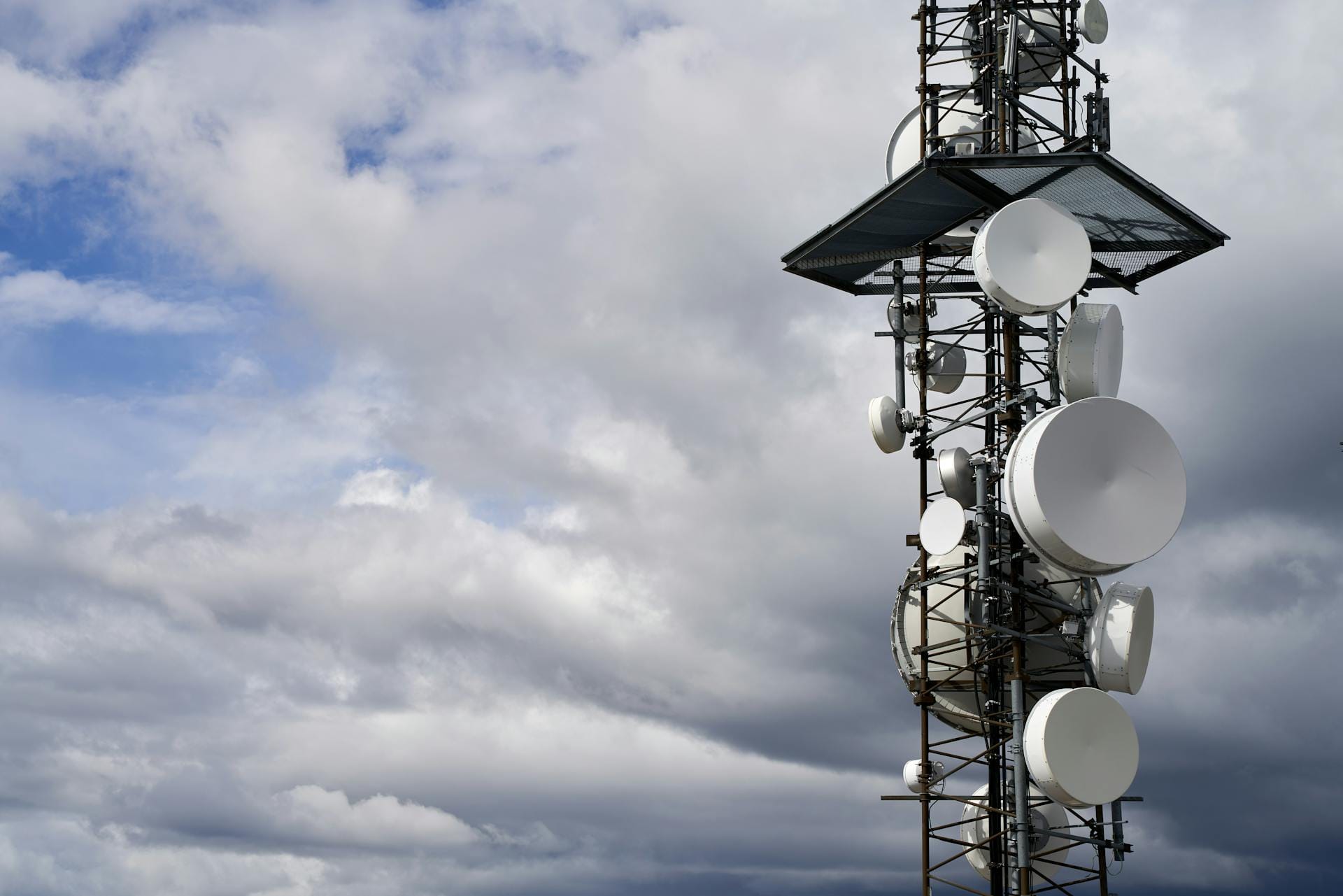
In the modern tech era, almost everyone uses a feature-packed mobile phone, tablet, or smartphone. These devices rely on wireless technology to connect for voice calls, data transfer, and internet services. Mobile communication works through radio waves and a network of interconnected cellular towers that enable seamless communication between devices.
Over the years, several mobile communication technologies have been developed to improve network speed, call quality, and internet connectivity.
These are different mobile technologies used for wireless communication, voice calls, mobile data, and internet connectivity on smartphones and other mobile devices.
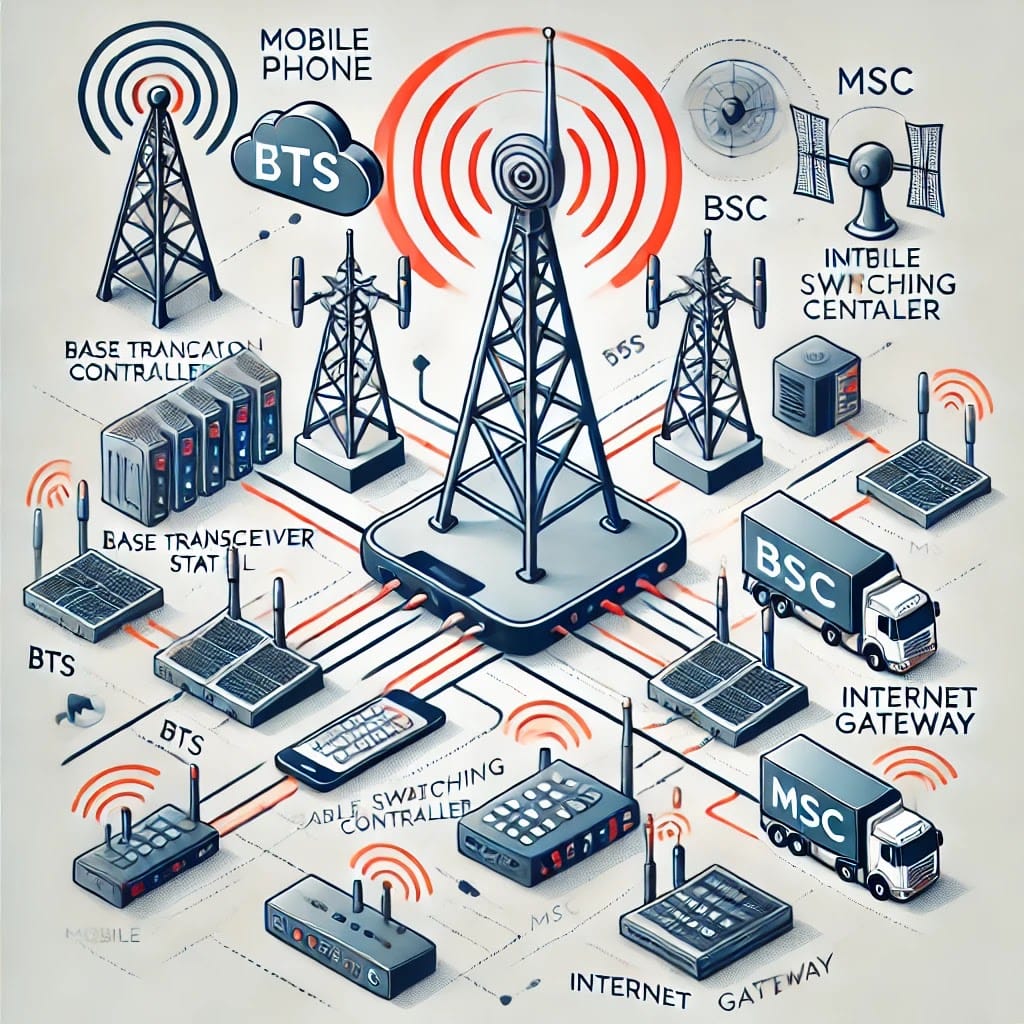
A mobile network consists of several components working together to provide smooth connectivity and uninterrupted communication. Here is how the process works:
When you make a call, send a message, or use mobile data, your smartphone sends signals through radio waves to the nearest cellular tower, known as a Base Transceiver Station (BTS).
The BTS forwards the signal to the Base Station Controller (BSC). The BSC manages multiple base stations and helps distribute resources efficiently.
The BSC then sends the signal to the Mobile Switching Center (MSC), which acts as the central hub for routing calls, messages, and data.
When a user moves from one location to another, the network automatically transfers the connection from one cellular tower to another. This process is known as a handover, and it ensures smooth and uninterrupted service while traveling.
Mobile networks also rely on technologies such as fiber optics, microwave links, and satellite connections to connect different parts of the network infrastructure.
Mobile networks have evolved significantly over the years, bringing major improvements in speed, capacity, reliability, and connectivity.
Introduced in the 1980s, 1G networks supported only voice calls using analog technology.
2G was introduced in the 1990s and marked the shift from analog to digital communication. GSM is a 2G mobile network technology widely used around the world. It introduced digital voice calls, SMS messaging, and SIM card support.
GSM (Global System for Mobile Communications) became one of the most widely used mobile communication standards worldwide.
3G was introduced in the early 2000s and brought mobile internet into mainstream usage. CDMA (Code Division Multiple Access) is another mobile communication standard mainly used in older 2G and 3G networks. It allowed multiple users to share the same frequency more efficiently.
Compared to 2G speeds of around 50 Kbps, 3G was a major improvement. Later, 3.5G technologies such as HSPA and HSPA+ further increased speeds up to 42 Mbps.
HSPA is an improved version of 3G technology that provides faster internet speeds for browsing, downloading, and video streaming.
HSPA+ is an upgraded version of HSPA, often called 3.5G. It offers better speeds, lower latency, and improved network performance.
LTE is a 4G wireless communication standard designed for high-speed internet access, HD streaming, online gaming, and faster downloads.
LTE (Long-Term Evolution) and VoLTE (Voice over LTE) improved both internet speed and voice call quality.
5G networks started rolling out globally around 2020 and introduced advanced technologies such as mmWave and Massive MIMO (Multiple Input Multiple Output).
5G enables technologies like smart cities, autonomous vehicles, cloud gaming, and advanced AI applications.
6G is the upcoming generation of wireless communication technology expected to launch around 2030. It is designed to be much faster, smarter, and more efficient than 5G.
India is actively preparing for the future rollout of 6G technology through the government’s Bharat 6G Vision initiative. The country aims to become a global leader in the design, development, and deployment of 6G technology by 2030.
The Indian government launched the Bharat 6G Mission to support:
Organizations such as:
Are already researching and testing next-generation wireless technologies for future 6G deployment in India.
| Generation | Speed | Main Feature |
|---|---|---|
| 1G | Analog | Voice calls |
| 2G | 50 Kbps | SMS |
| 3G | 2 Mbps | Internet |
| 4G | 1 Gbps | HD streaming |
| 5G | 10 Gbps | Low latency |
| 6G | 100 Gbps | AI optimization |
Over the last 50 years, mobile networks have evolved dramatically, transforming communication from simple voice calls to ultra-fast internet connectivity. Each generation has brought major improvements in speed, reliability, and user experience.
The future of wireless communication is expected to move toward 6G, which may offer speeds up to 100 Gbps, along with advanced AI-powered network optimization and near-instant connectivity.
A mobile network is a wireless communication system that allows smartphones and other devices to make calls, send messages, and access the internet using cellular towers and radio signals.
GSM uses SIM cards and is widely used globally, while CDMA uses a different communication method that was mainly used in older 2G and 3G networks.
LTE stands for Long-Term Evolution. It is a 4G wireless communication technology designed for high-speed internet access, faster downloads, and smoother streaming.
VoLTE stands for Voice over LTE. It allows voice calls to be made over 4G LTE networks with better call quality and faster connection times.
HSPA and HSPA+ are improved versions of 3G technology that provide faster mobile internet speeds and better network performance.
5G is significantly faster than 4G. While 4G speeds can reach up to 1 Gbps, 5G networks can theoretically achieve speeds up to 10 Gbps with much lower latency.
Massive MIMO (Multiple Input Multiple Output) is a technology used in 5G that allows multiple antennas to send and receive data simultaneously, improving speed and network capacity.
6G is expected to launch commercially in India around 2030, with testing and research already underway through the Bharat 6G Mission.
6G is expected to offer ultra-fast speeds up to 100 Gbps, AI-powered optimization, ultra-low latency, better rural connectivity, and advanced support for smart devices and autonomous technologies.
Companies and institutions such as Reliance Jio, Bharti Airtel, and the Indian Institute of Technology Hyderabad are actively researching and developing future 6G technologies in India.